
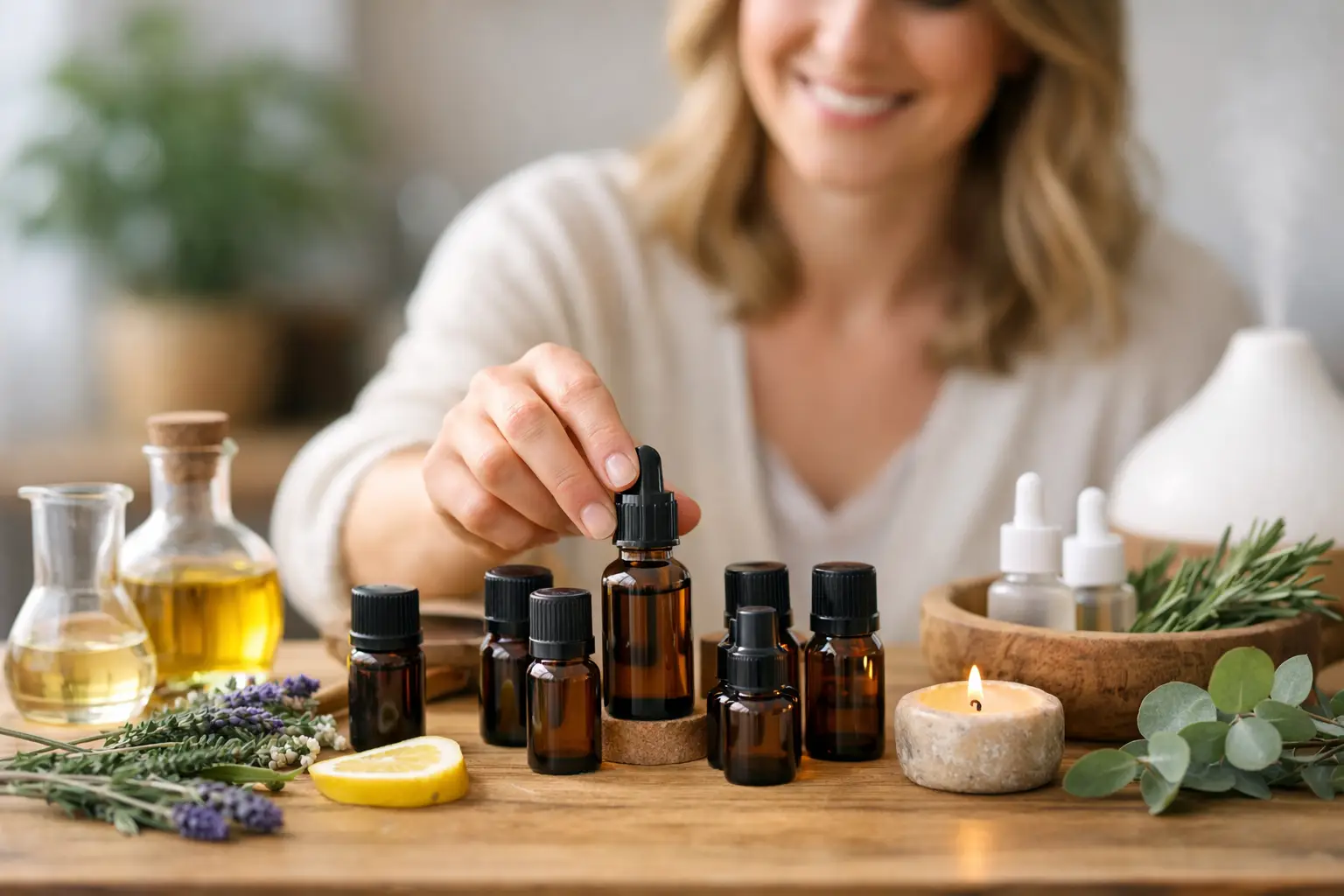
A small bottle can change the feel of a room in minutes: bright citrus for a freshly tidied kitchen, soft lavender beside the bed, or grounding woods for a quieter evening. At Artisan Goods, we believe fragrance should feel personal rather than prescribed. This guide to choosing essential oils will help you select scents that suit your space, routine and gifting plans, while using them thoughtfully.
Start with the moment you want to create
The best essential oil is rarely the one with the most dramatic description. It is the one you will genuinely reach for. Before choosing a scent, think about where and when you expect to use it.
For morning routines and busy daytime spaces, citrus oils such as lemon, orange and grapefruit often feel clean, sunny and uplifting. Peppermint has a crisp, cool character that many people enjoy in a home office or when the house needs a fresher feel. These brighter notes can be particularly lovely in a diffuser near an entranceway, kitchen or workspace.
When the aim is to slow down, floral and herbaceous oils tend to suit the mood. Lavender is a familiar choice for an evening wind-down, while geranium brings a greener floral note and clary sage can feel warm and softly herbal. For a more cocooning atmosphere, look to richer scents such as frankincense, sandalwood, cedarwood or patchouli. They work beautifully during a bath ritual, meditation practice or a calm night at home.
There is no universal scent for relaxation or focus. A fragrance that feels restorative to one person can be too sweet, sharp or heavy for another. Trust your own reaction and begin with aromas you already enjoy in candles, soaps, teas or home fragrance.
A guide to choosing essential oils by scent family
If you are building a small collection, choosing across scent families gives you more options than buying several oils with a similar character. You do not need dozens of bottles. Three or four well-chosen oils can cover daily freshening, evening ambience and simple blending.
Citrus and fresh oils
Lemon, sweet orange, bergamot and grapefruit bring brightness. They are easy to enjoy and make a welcoming choice for a housewarming, birthday or self-care gift. Citrus oils generally pair well with herbs, florals and woods, so they are useful if you want to experiment with blends without making them overly complicated.
Floral oils
Lavender, rose geranium and ylang ylang offer softness and a more traditionally romantic feel. Lavender is often the most versatile starting point because it sits comfortably in a bedroom, bathroom or living space. Richer florals need a lighter hand in a diffuser, especially in smaller rooms.
Herbal and minty oils
Rosemary, eucalyptus, tea tree and peppermint have a clean, aromatic profile. They can make a space feel fresh and clear, but they are often more intense than citrus or lavender. Start with a smaller amount and balance a sharper oil with a gentler citrus or woody note if you are blending.
Woody, resinous and earthy oils
Cedarwood, frankincense, sandalwood and patchouli have depth. Their character can feel meditative, warm or quietly luxurious, making them particularly suited to evening rituals and more atmospheric spaces. They also bring staying power to blends, as lighter citrus notes can fade more quickly.
Look beyond the name on the bottle
“Essential oil” is a broad term, so quality is worth considering before you decide purely by scent or price. A clear product listing should tell you what plant has been used and ideally include its botanical name, such as Lavandula angustifolia for lavender. This helps distinguish plants that share a common name but have different fragrance profiles and uses.
It is also useful to check the country or region of origin where this is available, plus the extraction method. Steam distillation is common for many leaves, flowers and woods, while cold pressing is often used for citrus peels. Neither method is automatically better – it depends on the plant – but transparency gives you a clearer sense of what you are buying.
Choose oils presented in dark glass bottles with a secure cap. Light and warmth can affect aromatic oils over time, so proper packaging matters. A low price can be tempting, particularly when you are trying a new scent, but unusually cheap oils may not offer the same purity or strength. Buying a little less of an oil you truly enjoy is often better value than collecting bottles that remain unopened.
Ethical sourcing matters too. Plants are grown in different climates, harvested in different ways and require varying quantities of material to make oil. Look for suppliers that share meaningful product information and treat the ingredient as more than a trendy fragrance. This is especially worthwhile when choosing a thoughtful gift for someone who values handmade, conscious homeware and wellness rituals.
Match the oil to how you plan to use it
A beautiful scent still needs to suit the format. Diffusers are often the simplest way to enjoy essential oils at home. Add only the amount recommended for your diffuser and start modestly: a scent should enhance a room, not overwhelm it. In a compact bedroom or study, fewer drops may be enough. Open-plan rooms can usually carry a little more fragrance.
For oil burners, follow the burner and oil guidance carefully, keep the water topped up, and never leave a flame unattended. Place any burner or diffuser on a stable surface away from children, pets, curtains and busy edges.
If you would like to use an oil on the skin, dilution is essential. Essential oils are concentrated and should not be applied neat. They need to be blended into a suitable carrier oil or a ready-made bath and body base according to the product instructions. Patch test a diluted product first, and stop using it if irritation occurs.
Do not drop essential oils straight into bathwater. Oil and water do not combine, which can leave concentrated droplets sitting against the skin. Use a properly formulated bath product or a suitable dispersing base instead. Essential oils are also not for swallowing unless a qualified healthcare professional has specifically advised it.
Choose with your household in mind
Natural does not automatically mean suitable for every person, every pet or every setting. If you are pregnant, breastfeeding, taking medication, managing a health condition or choosing oils for a child, seek personalised advice from an appropriate healthcare professional before use. Follow age guidance on the product, as some oils are not recommended for young children.
Pets can be more sensitive to fragrance than people. Diffuse in a well-ventilated room, give animals the option to leave the area and avoid using oils around them without checking whether the specific oil is appropriate. The same careful approach applies if anyone in the household has asthma, allergies or fragrance sensitivities.
Keep bottles upright, tightly closed and out of reach of children. Store them somewhere cool and dark, rather than on a sunny windowsill or beside a radiator. A small label with the purchase date is useful, particularly if you have begun a growing collection.
Keep your first collection simple
A balanced first selection might include one bright oil, one calming floral or herbal oil, and one deeper woody or resinous oil. For example, sweet orange offers easy daytime freshness, lavender brings gentle familiarity, and cedarwood adds warmth for the evening. This creates variety without leaving you with too many choices.
Once you know which direction you prefer, blending becomes more intuitive. Try a fresh pairing such as orange with rosemary, a softer combination such as lavender with geranium, or a grounding blend of frankincense and cedarwood. Begin with a few drops in total, make a note of combinations you love, and adjust gradually. The goal is not to create a complicated perfume – it is to make your home feel more like yours.
Essential oils can be a lovely addition to a birthday present, a new-home gesture or a self-care moment, especially when chosen with the recipient’s tastes in mind. A familiar scent is usually safer for a gift, while a more unusual resin, spice or earthy note suits someone who enjoys exploring fragrance.
Let your collection develop slowly. The scent you choose for a bright Saturday morning may not be the one you want beside a candle on a rainy evening, and that changing preference is part of the pleasure. Start with what feels good, use each oil with care, and allow simple rituals to become the ones you look forward to most.