
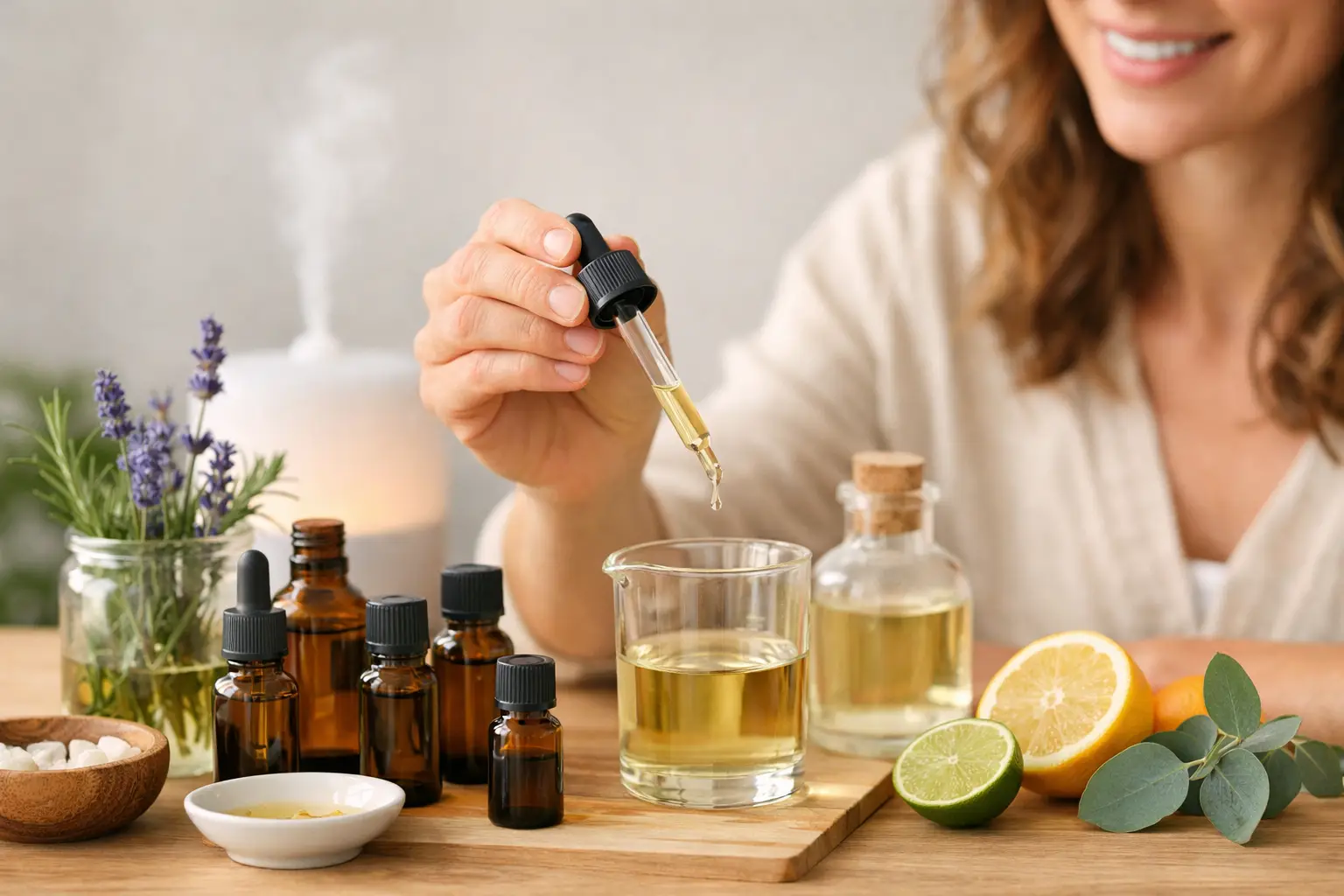
A blend can smell gorgeous in the bottle and completely different once it warms in a diffuser, settles into bath water or lingers in a room. That is usually the point where people realise how to blend essential oils is less about guesswork and more about balance. You do not need to be an aromatherapist to make something lovely, but a little structure helps you create blends that feel calm, fresh, cosy or uplifting rather than muddled.
The good news is that blending essential oils is simple once you understand how scents behave together. A few thoughtful choices will usually give you a better result than throwing five favourite oils into the same mix and hoping for the best.
How to blend essential oils without overcomplicating it
The easiest way to begin is to think in layers. Most blends work best when they include a top note, a middle note and a base note. Top notes are the scents you notice first. They tend to feel bright, fresh or lively. Citrus oils often sit here. Middle notes give the blend its character and body, with floral, herbal and soft spicy scents often falling into this group. Base notes are deeper and longer-lasting, adding warmth, richness and staying power.
You do not need all three in every blend, especially if you want something light and airy for daytime use. But if a blend smells sharp, flat or too fleeting, it often means it is missing a middle or base note. If it feels heavy or overpowering, it may need something brighter to lift it.
A useful starting point is a simple ratio of 3:2:1. That means three parts top note, two parts middle note and one part base note. It is not a rule that must be followed every time, but it gives beginners a reliable shape to work with. Once you know what you enjoy, you can shift the balance. Some people prefer citrus-led blends, while others like warmer, earthier combinations that feel more grounded.
Start with the mood, not just the scent
If you are wondering how to blend essential oils in a way that feels intentional, start with what you want the blend to do in your space. Do you want the room to feel clean and bright? Do you want a bedtime blend that feels soft and quiet? Are you creating something for a long bath, a welcoming hallway or a cosy evening at home?
Working from mood keeps your choices focused. For a fresh and energising blend, lighter oils such as lemon, sweet orange, grapefruit, peppermint or eucalyptus often work well. For something restful, lavender, chamomile, clary sage and cedarwood tend to create a calmer feel. If you want warmth and comfort, try richer notes such as sandalwood, patchouli, frankincense or sweet spices in moderation.
This matters because a pleasant scent is not always the same as the right scent for the moment. Peppermint in a bedroom blend may feel too brisk. A heavy resinous oil in a kitchen diffuser may feel too dense. Context changes everything.
Choose two or three oils before trying bigger blends
When people first start blending, there is a temptation to use more oils because it sounds more sophisticated. In reality, the opposite is often true. Two or three oils are usually enough to make a blend feel polished and balanced.
A simple pair can be beautiful. Lavender and sweet orange feel soft and comforting. Lemon and rosemary can smell crisp and clear. Frankincense and bergamot bring depth without becoming too heavy. Once you are comfortable with those pairings, adding a third oil gives you room to fine-tune the blend.
If you jump straight to five or six oils, it becomes much harder to tell which one is improving the blend and which one is making it less harmonious. Smaller blends are easier to adjust, easier to recreate and usually more versatile across diffusers, burners and home rituals.
Test your blend in drops and keep notes
The most practical way to blend is by counting drops. Start small so you do not waste oils. A six-drop test blend is ideal because it is easy to scale up later. Using the 3:2:1 idea, you might begin with three drops of a bright top note, two drops of a middle note and one drop of a base note.
Smell the blend straight away, then come back to it after a few minutes. Some oils become stronger as they settle together. Others soften. This is where note-taking becomes genuinely useful. Write down the oils, the drop count and your first impression. Then add a quick comment such as too sharp, needs warmth or lovely but fades quickly.
That may sound a little methodical for something as sensory as aromatherapy, but it saves frustration. If you make a blend you love, you will want to remember exactly how you made it. If it does not work, your notes help you understand why.
Understand what each type of oil contributes
Not every oil needs to be the star. Some are there to brighten, some to soften, and some to anchor the whole blend.
Citrus oils are often the quickest way to make a blend feel cheerful and clean, but they can disappear faster than woods or resins. Floral oils can add softness and elegance, though some can dominate if overused. Herbal oils bring freshness and a more natural, green character. Woods and resins usually add depth, making a blend feel more settled and rounded.
This is why trade-offs matter. If you want a blend that smells vivid the moment it starts diffusing, citrus is excellent. If you want something that lingers in the background and feels cocooning, you may need a deeper note to support it. There is no single perfect formula because the best blend depends on how and where you plan to use it.
Match the blend to the way you will use it
A diffuser blend is not always the same as a bath blend or a room aroma blend. Scents behave differently depending on heat, water and air circulation.
For diffusers, cleaner and more defined blends often work best because the scent disperses through the room. Too many heavy notes can feel cloying in a smaller space. For bath-time rituals, softer florals, relaxing herbs and gentle woods can feel more soothing. In shared living spaces, balanced blends with a fresh opening and a warmer finish are often easier to live with for longer periods.
The size of the room matters too. A blend that feels subtle in an open-plan area may become overpowering in a bedroom or bathroom. If in doubt, start lighter. You can always add another drop next time.
A few easy blend ideas to try
If you want a reliable starting point, begin with familiar scent families. For a fresh daytime blend, try sweet orange, lemon and peppermint. For a slower evening feel, lavender, cedarwood and frankincense work beautifully together. If you like something clean but not too sharp, bergamot, lavender and rosemary create a lovely balance.
These are only starting points, not fixed recipes. If you prefer softer citrus, choose mandarin over lemon. If cedarwood feels too dry, swap in sandalwood for a creamier finish. The best blends often come from small adjustments that suit your own home and preferences.
Less really is more
One of the most common mistakes is simply using too much. Essential oils are concentrated, and more drops do not automatically mean a better fragrance. In fact, overloading a blend can flatten it. Distinct notes disappear, and everything merges into one strong, less pleasant scent.
A restrained blend often smells more refined. You should be able to notice a little movement in it – perhaps a bright first impression followed by something softer or warmer underneath. That is what makes a handmade blend feel thoughtful rather than one-dimensional.
If a blend smells too intense, do not throw it away. Try softening it with a gentle middle note such as lavender, or adding a bright citrus note to lift it. Small corrections usually work better than big ones.
Safety still matters
Even if you are blending for atmosphere rather than massage, essential oils should be used carefully. Always check whether an oil is suitable for your intended use, especially around baths, children or pets. Some oils are more potent than others, and skin contact requires extra care.
Storage matters too. Keep oils sealed, upright and away from heat and direct sunlight so the scent stays true for longer. A well-kept collection gives you more consistent blending results.
For many people, learning to blend becomes part of the pleasure of choosing aromatherapy and home fragrance products in the first place. It turns a bottle of oil into something more personal – a scent that suits your evening, your room or the feeling you want to create. If you keep it simple, trust your nose and make changes one drop at a time, you will end up with blends that feel beautifully your own.