
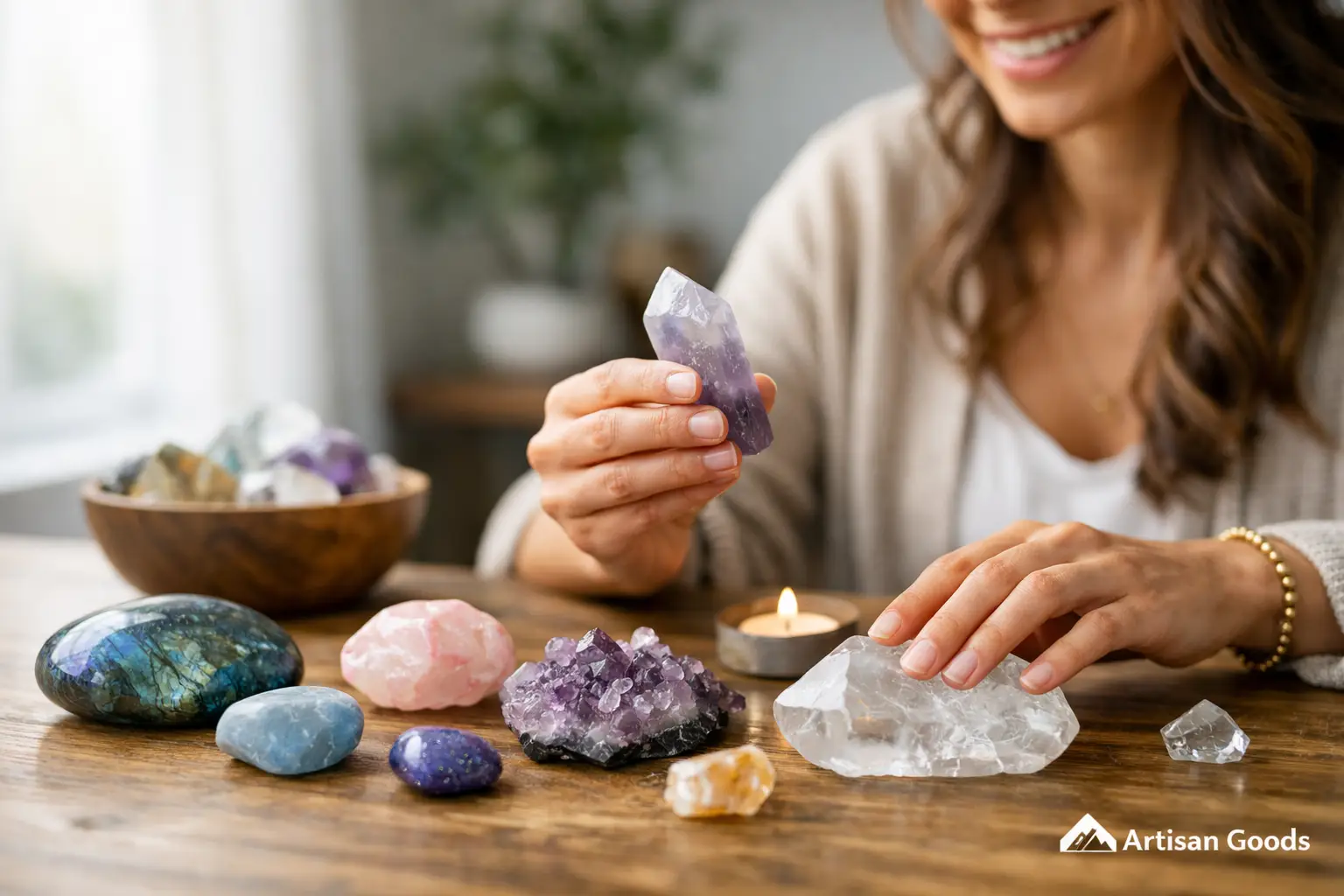
You have probably seen a rose quartz heart on a bedside table, an amethyst cluster beside a candle, or a clear quartz point tucked into a gift box and wondered what crystals mean. The short answer is that different crystals are often linked with different qualities, moods and intentions. The longer answer is more personal – crystal meaning is shaped by tradition, symbolism, colour, cultural use and the simple way a stone makes someone feel when they hold it.
For many people, crystals sit somewhere between decoration, ritual object and thoughtful keepsake. They can be chosen for their colour, their energy associations, their place in a calming home setup, or because they make a meaningful gift. That is why understanding them does not need to feel complicated or overly mystical. A practical approach usually works best.
What crystals mean in everyday terms
When people talk about crystal meanings, they are usually referring to the qualities traditionally associated with a particular stone. Rose quartz is often connected with love and gentleness. Amethyst is widely linked with calm and clarity. Citrine is commonly associated with positivity and confidence. Clear quartz is often described as a versatile stone linked with focus and amplification.
These meanings are not scientific guarantees, and that matters. Crystals are best understood as symbolic objects that many people use to support intention, reflection and atmosphere. In other words, a crystal does not have to “do” something measurable to still feel useful or special. A polished stone on a desk can serve as a visual prompt to stay grounded. A crystal placed in a relaxing bath-and-candle ritual can help mark a moment of rest.
That is also why two people can choose the same crystal for different reasons. One person might pick green aventurine because it is associated with growth and good fortune. Another might simply love its soft green tone and how it works with their home décor. Both reasons are valid.
Why crystal meanings vary
If you have ever looked up one stone and found several interpretations, you are not imagining it. Crystal meanings are not fixed in one universal system. They come from a mix of historical belief, modern spiritual practice, colour symbolism and retail convention.
Colour plays a big part. Pink stones are often linked with love, softness and emotional warmth. Purple stones tend to be associated with peace, intuition and reflection. Green is commonly tied to balance, abundance and renewal. Black crystals are often chosen for protection and grounding. Clear stones are usually connected with clarity and intention.
Then there is the shape and finish of the stone. A tumble stone feels portable and easy to keep close. A point or tower looks more directional and intentional. A cluster brings more texture and visual presence to a shelf or bedside table. The meaning people attach to a crystal can shift slightly depending on how it is presented and used.
So if you are trying to work out what crystals mean, it helps to think in layers rather than rules. There is the traditional meaning, the colour story, the purpose it serves in a room or ritual, and the personal connection someone has with it.
Common crystal meanings people look for
Some stones come up again and again because their meanings are easy to understand and easy to gift.
Rose quartz is one of the most recognisable. It is often chosen to represent love, compassion and emotional comfort. That makes it especially popular for self-care corners, bedroom styling and thoughtful presents.
Amethyst is usually associated with calm, balance and inner peace. Its rich purple colour gives it a decorative appeal too, which is why it suits both spiritual spaces and stylish home displays.
Clear quartz is often seen as an all-rounder. People choose it for clarity, focus and intention. If you are not sure where to start, it is often considered an accessible choice because it pairs easily with other crystals and does not feel too niche.
Citrine is commonly linked with warmth, optimism and abundance. Its golden tone naturally lends itself to uplifting spaces, making it a popular choice for desks, living rooms or gifting moments that call for encouragement.
Black obsidian and black tourmaline are both often associated with protection and grounding. These are the stones people tend to pick when they want something that feels steadying, anchoring or strong in appearance.
Selenite is usually linked with cleansing and calm. Its soft, luminous look makes it a favourite for peaceful home settings, especially when paired with candles, incense holders or other wellness pieces.
How to choose a crystal without overthinking it
The easiest way to choose is to start with purpose. Ask what you want the crystal to represent rather than trying to memorise every meaning. If the aim is comfort, rose quartz or amethyst may feel suitable. If you want focus, clear quartz might make sense. If you are buying for someone starting a new chapter, citrine or green aventurine may feel fitting.
It also helps to consider where it will live. A small polished stone works well for a pocket, handbag or bedside dish. A larger raw piece or cluster suits shelves, desks and home styling. If it is a gift, think about the person first. Are they drawn to subtle neutral tones, richer colours, or spiritual homeware with a clear presence?
There is a trade-off here between symbolism and style. Sometimes the perfect crystal meaning comes in a colour or finish that does not suit the recipient. In that case, it is usually better to choose something they will genuinely enjoy having around. A crystal that fits naturally into someone’s life is more meaningful than one chosen only because a chart said so.
What crystals mean as gifts
Crystals work particularly well as gifts because they feel personal without being overly prescriptive. They can be small enough to add to a larger present or distinctive enough to stand on their own. They also suit many occasions – birthdays, thank-you gifts, new home moments, Christmas, or simple thinking-of-you gestures.
The appeal lies in the balance between beauty and meaning. A crystal says more than a generic decorative item, but it still leaves room for the recipient to interpret it in their own way. That is useful if you are shopping for someone who enjoys wellness products, home fragrance, ritual pieces or calming interiors, but does not necessarily want anything too formal or complicated.
For gifting, presentation matters. A polished crystal in a soft pouch, a heart-shaped stone, or a decorative piece that sits neatly with candles or incense can feel especially considered. This is where artisan retail has an advantage – the object itself needs to look and feel special, not just carry a label.
Using crystals in a calm home routine
Not everyone uses crystals in a spiritual sense. Many people simply include them in home rituals because they help create atmosphere. A crystal beside a candle at the end of the day can act as a cue to slow down. A small stone near a bath tray, diffuser or journal can make a self-care routine feel more intentional.
This is often where crystal meaning becomes most useful. You are not trying to perform a perfect ritual. You are choosing an object that supports a feeling you want more of – rest, focus, softness, confidence or balance. In a busy home, that kind of visual shorthand can be surprisingly grounding.
If you prefer a lighter touch, crystals can also be treated as decorative accents with symbolic value. An amethyst cluster on a shelf or a bowl of tumbled stones on a coffee table can add texture, colour and personality without turning the space into something it is not.
A sensible way to think about crystal meanings
It is easy to come across extreme claims, and a bit of balance is useful. Crystals can be meaningful, beautiful and comforting, but they are not a replacement for practical support, medical care or real-world action. Their value often lies in what they help you notice, remember or set aside time for.
That may be why they continue to appeal to so many people. In a gifting context, they feel thoughtful. In a home setting, they add beauty and intention. In a personal routine, they can mark a pause that might otherwise get lost in the day.
So when asking what crystals mean, the most helpful answer is often this: they mean what tradition suggests, what colour and form communicate, and what the person holding them needs them to represent. If a crystal helps a room feel calmer, a gift feel more personal, or a daily ritual feel more grounded, that meaning is already doing something worthwhile.