
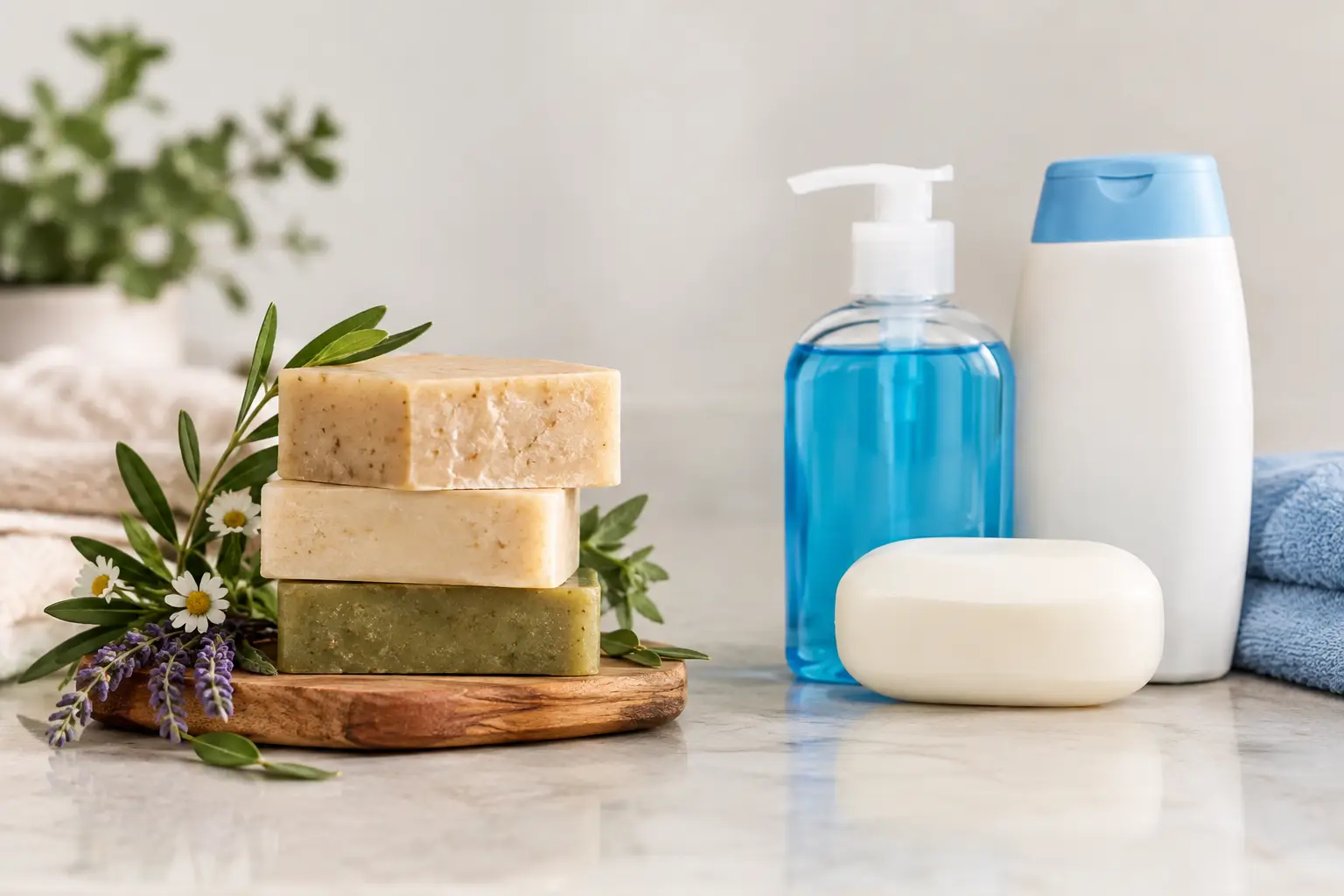
A soap bar can turn an ordinary wash into a small ritual: warm water, a favourite scent and a few quiet minutes for yourself. At Artisan Goods, we know that choosing natural soap versus commercial soap is not simply about what looks prettiest by the basin. Ingredients, fragrance, skin preferences, packaging and the way a bar is made all shape whether it feels right for your everyday routine or makes a thoughtful bath and body gift.
Natural soap versus commercial soap: the real difference
The simplest distinction is not always “good” versus “bad”. Natural soap is usually made using traditional soapmaking methods, combining oils or butters with an alkali. The finished bar may feature plant oils, botanical extracts, clays, dried flowers or essential oils, and is often made in smaller batches. Its appeal lies in the ingredient story, handcrafted character and sensory detail.
Commercial soap is a broad term. It can mean a mass-produced bar of true soap, a cleansing bar made with synthetic detergents, or a product blended for a particular price point, perfume profile or shelf life. Some commercial bars are perfectly pleasant and practical. Some are made for a low-cost, consistent everyday wash. Others are designed as beauty products with carefully developed fragrance and presentation.
That overlap matters. A handmade bar can still be commercially sold, while a factory-made bar can contain plant-derived ingredients. Rather than relying on the label “natural” alone, look at how the product is made, what is in it, how it is scented and what you want from the experience.
What you may notice in a natural soap bar
Handcrafted natural soaps often have a more individual appearance. A swirl of colour, a marbled top or a slightly irregular cut is part of the charm rather than a flaw. Many makers use nourishing oils such as olive, coconut, sunflower or shea butter, choosing a balance that creates a creamy lather while helping the bar remain firm enough to last.
Traditional soapmaking also creates glycerine naturally. In handmade bars, that glycerine is commonly retained, contributing to the comfortable, cushioned feel many people enjoy after washing. A well-made natural bar can feel especially lovely for hands and body, particularly when paired with a calm bath ritual, soft towels and a home fragrance you enjoy.
Scent is another reason people gravitate towards natural soap. Essential-oil-led blends can offer recognisable notes such as lavender, citrus, peppermint or rosemary. They tend to feel more botanical and less like a conventional perfume, though their aroma may be gentler or fade more quickly than a strongly fragranced bar.
There are trade-offs. Natural colourants may soften over time, and the surface of a bar made with rich plant oils can change slightly as it ages. This is normal for a product with fewer stabilisers. It also means storage matters: a bar left in a puddle of water will disappear far faster than one allowed to dry between uses.
“Natural” does not automatically mean gentle
This is the most useful point to remember when shopping. Natural ingredients can still irritate some skin. Essential oils, citrus oils, spices and even certain botanical extracts may not suit everyone, especially those with fragrance sensitivities or a compromised skin barrier.
Equally, a simple commercial cleansing bar may work better for someone who wants a fragrance-free option or a lower-pH formulation. Traditional true soap is naturally alkaline, whereas some detergent-based cleansing bars are formulated closer to the skin’s usual acidic surface. If you have a diagnosed skin condition, recurring irritation or are choosing products for a child, it is sensible to check with a pharmacist, GP or dermatologist and patch test a new product where appropriate.
The best choice is personal. “Natural” describes an approach to ingredients and making, not a guarantee that a product will suit every skin type.
How commercial soap earns its place
Commercial soap is often chosen for consistency. The bar will generally look, smell and perform the same from one purchase to the next. Manufacturers can create a very stable lather, a long-lasting scent and a finish that holds up well in busy family bathrooms. For people who prefer a familiar product with no surprises, that reliability has real value.
Some commercial bars also use synthetic fragrance, colours, preservatives or chelating agents to maintain scent, appearance and performance. These are not automatically something to avoid. Cosmetic ingredients used in products sold in the UK must meet safety requirements, and an ingredient’s origin alone does not tell you whether it is suitable for you.
The question is whether the product aligns with your priorities. If you want a bar with bold, lasting perfume and a uniform look, a commercial option may be ideal. If you enjoy knowing that a bar was poured, cut and finished in small batches, natural soap may feel more rewarding. Plenty of households use both – an uncomplicated everyday cleanser in one place and a beautifully scented artisan bar for the guest bathroom, weekend bath or a small moment of care.
Read the label with curiosity, not fear
A clear ingredient list tells a better story than front-of-pack claims. In the UK, cosmetic labels list ingredients using recognised INCI names, which can look unfamiliar at first. Plant oils used to make soap may appear as sodium olivate, sodium cocoate or similar names, reflecting their transformed soap form. That does not make them less natural; it simply describes the chemistry of soapmaking.
Look for fragrance declarations too. “Parfum” can refer to a fragrance blend, while essential oils may appear by their botanical names. Where relevant, individual fragrance allergens must also be listed. If you know you react to a particular ingredient, this information is far more useful than a broad natural or commercial label.
For an artisan-style choice, you may prefer short, purposeful ingredient lists and scent profiles you can easily picture. Lavender and patchouli can feel grounding; citrus and mint can feel bright and refreshing; unscented options offer a quieter alternative. For a present, think about the recipient’s preferences rather than choosing the strongest fragrance by default.
Packaging, provenance and everyday value
Natural soaps are often sold in paper wraps, card boxes or minimal packaging, which can make them appealing for shoppers trying to reduce plastic around everyday essentials. But packaging is only one part of the picture. Consider the bar’s size, how long it lasts, the source of its ingredients and whether you will genuinely use it.
A firm, well-cured soap that is kept dry can last surprisingly well. Use a draining soap dish rather than resting it on the edge of the bath, and cut a large bar in half if you prefer to keep one piece fresh. This small habit can make a more premium bar feel like good value rather than an occasional indulgence.
Ethical sourcing also deserves a closer look. Small-batch and artisan products can support skilled makers and preserve traditional craft, but it is worth avoiding assumptions based only on appearance. Seek out brands and retailers that are transparent about materials, making and sourcing, especially when buying products that feature plant oils, botanicals or handmade finishes.
Choosing the right bar for your routine
For an everyday handwash, a durable bar with a scent you will not tire of is usually the practical choice. For a long bath, a softer, aromatic natural soap can add to the sense of occasion without needing a complicated routine. For a guest, choose something attractive, well wrapped and easy to enjoy – a gentle floral, fresh citrus or calming herbal fragrance is often more universally appealing than an intense blend.
If you are building a self-care moment, let the soap work alongside the rest of the room. A handmade bar beside a candle, a bath bomb or a softly scented diffuser can make a simple evening feel more considered. It also makes a lovely addition to a birthday, thank-you or Christmas present, particularly for someone who appreciates useful gifts with a little more character.
Natural soap versus commercial soap is ultimately a choice between different strengths, not opposing sides. Let your skin’s needs, your scent preferences and the kind of everyday ritual you want to create guide you. The right bar is the one you look forward to using, then care for well enough to enjoy to the very last lather.