
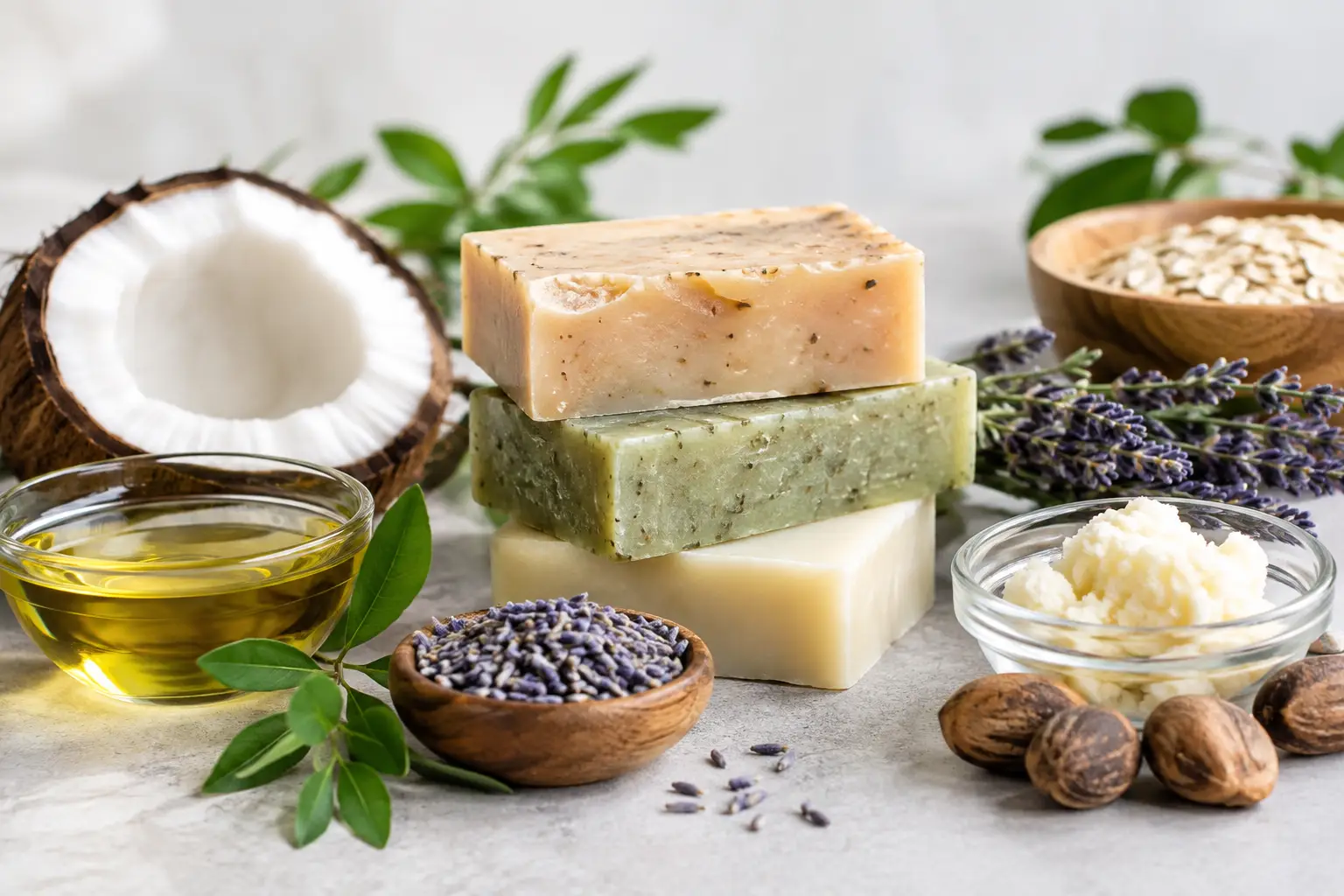
A bar of soap can look beautifully simple, yet its character is shaped by a small collection of carefully chosen materials. At Artisan Goods, the appeal of natural soap ingredients lies in that tactile difference: a creamy lather, a herbaceous scent, a petal-strewn surface or a bar that feels considered enough to place beside the basin or give to someone special.
The word “natural” is often used generously in bath and body shopping, so it helps to look beyond the front label. A good handmade soap does not need an endless ingredient list to feel luxurious. Instead, it should tell you what gives it cleansing power, what lends it texture and colour, and what provides its fragrance. Once you know the basics, choosing a soap becomes less about chasing trends and more about finding a bar that suits your routine, scent preferences and gifting plans.
What natural soap ingredients actually do
Traditional bar soap is made through saponification. This is the process in which oils or butters react with an alkali, usually sodium hydroxide, to become soap. Sodium hydroxide may sound unfamiliar, but it is an essential part of making a true bar soap. When a recipe has been correctly formulated and cured, it has reacted with the oils to create the finished cleansing bar.
That distinction matters because natural does not automatically mean unprocessed, and a long chemical-sounding name does not automatically mean something to avoid. The more useful question is what purpose each ingredient serves and whether the finished bar is made with a clear, sensible formula.
Natural soap ingredients generally fall into a few helpful groups: plant oils and butters for the soap base, botanicals and mineral colourants for appearance, essential oils or fragrance for scent, and practical additions such as clay, oatmeal or salt for texture. The proportions matter as much as the ingredients themselves. A bar rich in one oil can behave very differently from a bar made with a balanced blend.
The oils and butters behind a good bar
Olive oil for a gentle, creamy feel
Olive oil is a familiar favourite in handmade soap. It creates a mild bar with a smooth, low, lotion-like lather. Soaps with a high olive oil content can feel particularly comforting for everyday handwashing, though they may take longer to harden and cure. They are often a lovely choice for anyone who prefers understated, simple soap over a very bubbly bar.
Coconut oil for cleansing and bubbles
Coconut oil brings firmness, cleansing ability and generous bubbles. It is useful in a balanced recipe, especially when a soap needs to lather well in hard water. Used in very high amounts, however, it can feel more cleansing than some people prefer. This is why skilled soapmakers pair it with gentler oils and richer butters rather than relying on one ingredient alone.
Shea butter and cocoa butter for richness
Plant butters add a more sumptuous quality to a bar. Shea butter is prized for its creamy feel, while cocoa butter can contribute firmness and a subtle naturally chocolatey note. Neither turns soap into moisturiser in the same way as a body butter, as soap is rinsed away, but both can make the washing experience feel softer and more indulgent.
Castor oil for lather support
Castor oil is often used in a modest quantity to help stabilise lather. It is rarely the star ingredient, but it can make a noticeable difference to the foam produced by other oils. It is a useful reminder that the most effective recipes are often built through balance rather than a single headline ingredient.
Botanicals, clays and other thoughtful additions
The extra details are where handmade bars become especially giftable. Dried lavender buds, rose petals, calendula and poppy seeds can create a beautiful finish, while oatmeal, sea salt and ground botanicals add a more tactile element.
These additions do come with trade-offs. Petals on top of a soap can look wonderful at first but may become darker with use. Large, scratchy pieces are not always ideal in a bar intended for frequent handwashing. A well-made soap uses decoration with restraint, so the bar remains pleasant and practical rather than simply pretty on the shelf.
Clays are another popular natural addition. Kaolin clay can give a bar a silky slip and soft, pale appearance. French green clay, pink clay and rhassoul clay create earthy colours and a more substantial feel. Unlike bright synthetic colourants, clays usually offer muted, nature-led shades that suit a calm bathroom or a thoughtful self-care gift.
Honey, goat’s milk and plant milks are sometimes included for their creamy character and natural sugars, which can support lather. These ingredients need careful handling during soapmaking, and they may not suit every preference. If you choose vegan bath and body treats, check the full ingredient list rather than assuming every handmade-looking bar is plant-based.
Scent: essential oils, fragrance and personal preference
Scent is often the first thing noticed when a bar is unwrapped. Essential oils such as lavender, peppermint, sweet orange, eucalyptus and lemongrass can create a fresh, botanical aroma. They have their own personalities: lavender feels calm and familiar, citrus scents feel bright, and mint or eucalyptus can bring a crisp, spa-like lift to the sink or shower.
Not every scented soap is fragranced only with essential oils. Some makers use cosmetic fragrance oils, which can offer more unusual or long-lasting scent profiles. There is no universal right answer. Essential-oil blends can be beautifully natural and evocative, while fragrance oils may be preferable for a particular scent experience. What matters is transparent labelling and using soap as directed, particularly for those with known sensitivities.
A scent that smells delightful in the wrapper can also behave differently during use. Citrus often feels lighter and may fade sooner than deeper floral, woody or resinous notes. For a bathroom guest soap or a small present, choose a fragrance that feels broadly appealing. For your own daily ritual, go with the aroma you genuinely want to meet every morning.
How to read a natural soap label
Ingredient labels can appear in their formal cosmetic naming style, which is useful but initially less familiar. You may see terms such as sodium olivate or sodium cocoate. These generally indicate oils that have already been turned into soap through saponification: olive oil soap and coconut oil soap respectively.
Look for a clear list that explains the bar’s main base oils, scent ingredients and notable additions. If essential oils are used, naturally occurring fragrance components such as limonene, linalool or citral may also be listed. These are common labelling requirements and do not mean a product is poor quality. They simply help customers identify potential fragrance allergens.
For sensitive skin or a pared-back routine, unscented or lightly scented soaps can be a sensible place to start. Patch testing is wise if you are trying a new product and know your skin reacts easily. A natural label is not a guarantee that every botanical or essential oil will suit every person.
Choosing a bar for your home or as a gift
A natural soap makes a small everyday luxury because it is useful, sensory and easy to enjoy. For a kitchen or utility room, a bright citrus or herbal bar can feel clean and uplifting. For the bathroom, creamy floral, lavender or softly earthy notes bring a more restful mood. Keep a spare bar in a drawer with linen, and it can add a gentle fragrance before it is even used.
When gifting, presentation and practicality belong together. A beautifully wrapped handmade bar is an easy choice for birthdays, thank-yous, housewarmings and seasonal surprises. Consider the recipient’s preferences rather than assuming richer is always better. A simple olive oil soap can be just as thoughtful as a highly decorated bar, particularly for someone who favours minimal ingredients and subtle scent.
Storage also affects how long a bar lasts. Let it dry between uses on a draining dish rather than leaving it in pooled water. This small habit preserves the bar’s shape and helps you enjoy every carefully selected ingredient for longer.
The best natural soap ingredients are not necessarily the rarest or most complicated. They are the ones chosen with purpose, blended well and made into a bar that turns a routine handwash or evening bath into a quieter, more considered moment.