
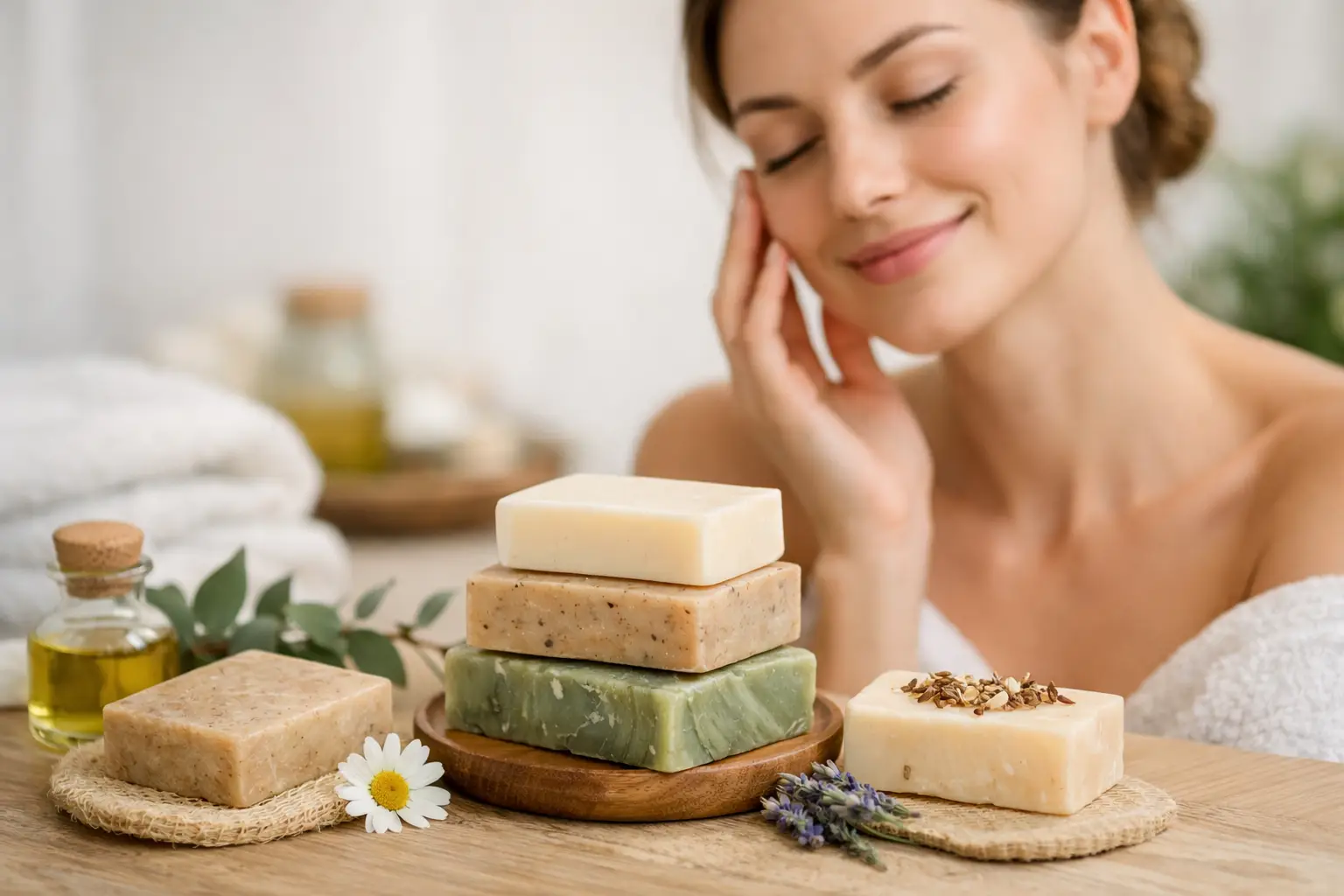
A beautifully wrapped bar can make an everyday wash feel like a small ritual, but sensitive skin often asks for a little more thought than a lovely scent or a natural-looking label. At Artisan Goods, we believe self-care should feel comforting, not complicated. Choosing natural soap for sensitive skin is less about finding one miracle ingredient and more about noticing how a bar is made, what has been added to it and how your own skin responds.
For some people, a simple handmade soap becomes a welcome alternative to heavily fragranced washes. For others, even a carefully crafted natural bar can feel drying or irritating. The kindest approach is to keep the ingredients straightforward, introduce one product at a time and give your skin permission to set the rules.
Why sensitive skin needs a more considered soap choice
Sensitive skin can react with tightness, stinging, redness, itching or dry, rough patches. These reactions are not always caused by one particular ingredient. Hot water, frequent washing, cold weather, rubbing with a towel and an already-compromised skin barrier can all play a part.
Soap choice still matters because cleansing removes oil, dirt and daily grime. A bar that cleanses too aggressively may leave skin feeling squeaky clean, but that stripped feeling is not necessarily a good sign. Skin usually feels more comfortable after washing when it is clean yet not tight, hot or thirsty for moisturiser.
“Natural” is a useful starting point, not a guarantee of gentleness. Plant oils, clays, botanicals and essential oils can all be beautiful additions to handmade soap, but naturally occurring ingredients can still be unsuitable for an individual. Lavender, citrus and peppermint, for example, may be a delight for one person and too stimulating for another. A thoughtful choice looks beyond the word natural and into the full ingredient list.
What to look for in natural soap for sensitive skin
Start with a short, clear ingredients list. Handmade bars are often made from a blend of oils and butters that are transformed during the soap-making process. The precise recipe affects how the finished bar feels: some are firmer and more cleansing, while others are designed to feel creamier and more conditioning.
For a first trial, an unscented or lightly scented bar is usually the calmest place to begin. Fragrance is one of the most common reasons people with reactive skin prefer to simplify their routine. This includes both added perfume and essential oils. Unscented does not have to mean joyless – the soft, clean character of a plain handcrafted soap can be a pleasure in its own right.
It is also worth being wary of bars packed with lots of extras simply because they sound luxurious. Dried flowers, rich spice blends, scrubby seeds and vivid colourants can look wonderful, especially when buying a thoughtful present, but they are not always ideal on easily irritated skin. A smoother bar with fewer decorative additions is often the more practical everyday choice.
Look for product information that is open about what is inside. Clear labelling helps you avoid known sensitivities and makes it easier to repeat what worked. If you know you react to a particular essential oil, nut-derived ingredient or fragrance component, do not rely on the front label alone.
The difference between gentle and moisturising
A soap bar may contain skin-loving oils, but it is still a rinse-off cleanser. That means it cannot replace a moisturiser, particularly if your skin is dry or prone to flare-ups. Think of a gentle soap as the first part of your ritual: it cleans without asking too much of the skin, then a suitable moisturiser helps support comfort afterwards.
This distinction can save a lot of disappointment. If a bar leaves your hands feeling dry within minutes, changing the soap may help, but so may washing in lukewarm water, patting rather than rubbing dry and applying moisturiser straight away.
Ingredients and features to approach with care
There is no universal avoid list, because sensitivity is personal. Still, a few features are sensible to consider before adding a new bar to your bathroom shelf.
Strong fragrance is often the clearest one. A scent can be part of the pleasure of a bath or shower, yet a highly perfumed bar is not always the best choice when your skin is unsettled. Save your most aromatic bath treats for occasions when your skin is happy, and keep a simpler option ready for daily cleansing.
Exfoliating particles deserve similar caution. A scrub can feel satisfying on rough areas such as heels, but frequent physical exfoliation can aggravate dry or reactive skin. The same goes for very hot water and vigorous flannels – neither needs to be part of an effective wash.
Some natural soaps are also traditionally alkaline. This is normal for true soap, but it can be a factor for people whose facial skin is especially dry, reactive or affected by a diagnosed skin condition. A bar that works beautifully on hands or body may not suit the face. It depends on the formula, your routine and the area you are washing.
If you have eczema, persistent rashes, cracked skin or an allergy history, it is wise to speak with a pharmacist, GP or dermatologist before experimenting with fragranced products or essential oils. Cosmetic products are not treatments, and a gentle routine should never replace medical advice when skin is sore, broken or repeatedly flaring.
Patch testing without making it a chore
Patch testing is a small step that can prevent a larger annoyance. Before using a new soap all over, build a light lather and apply a little to a small area of intact skin, such as the inner arm. Rinse it away as you normally would, then watch the area over the next day or two.
This is not a perfect prediction of how every part of your body will react, but it gives you useful information. If you notice burning, itching, swelling, pronounced redness or a rash, stop using the product. Do not try to “push through” irritation in the hope that your skin will get used to it.
When the test seems fine, use the new bar on a small area first rather than changing your entire routine at once. Keeping the rest of your skincare simple makes it easier to identify the cause if something does not agree with you.
Make your washing routine gentler, too
The right bar does more when it is paired with a low-fuss routine. Wash with lukewarm water instead of very hot water, especially during chilly British months when skin is already more prone to dryness. Cleanse for long enough to remove what you need to remove, then rinse thoroughly rather than repeatedly re-lathering.
Afterwards, pat skin dry with a soft towel. This is particularly helpful after a bath, when lingering water can contribute to dryness as it evaporates. Follow with a moisturiser that suits your skin while it is still slightly damp.
Store handmade soap somewhere it can dry between uses. A draining soap dish helps the bar last longer and keeps it pleasant to use. It is a small practical detail, but it also respects the care that has gone into a handcrafted product.
Choosing a bar as a gift
Soap is a lovely, useful gift, but sensitive skin adds a little nuance. If you know the recipient has allergies or a reactive complexion, choose simplicity over novelty. An unscented or gently formulated bar, presented alongside a note that makes no assumptions about their skin, is more thoughtful than a strong fragrance chosen only for its appearance.
If you are unsure, a flexible gift choice lets them browse for a scent, texture or handmade detail that suits their own routine. Personal care is personal, and that freedom can be part of the gift.
Let comfort be your guide
The best natural soap for sensitive skin is not necessarily the most expensive, most aromatic or most decorated bar. It is the one that leaves your skin comfortably clean and fits easily into your daily rhythm. Begin simply, listen to what your skin tells you and let the sensory extras remain just that – extras to enjoy when they genuinely feel good.