
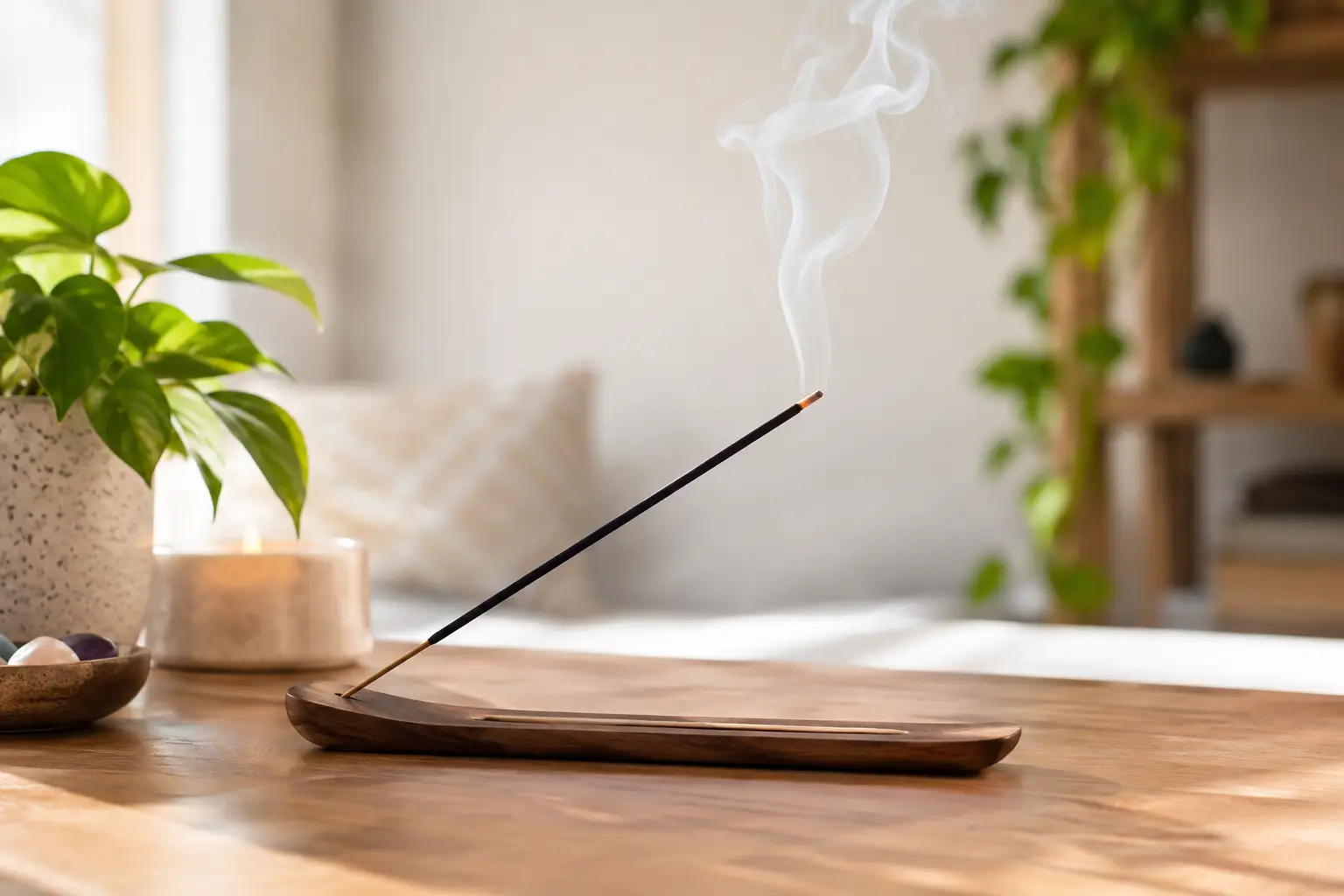
A single incense stick can change the feel of a room in minutes: warm woods, temple-like resins, soft florals or a familiar scent that signals time to slow down. But is incense safe to burn at home? For most people, occasional use in a well-ventilated space can be an enjoyable part of a home ritual. The key is to treat it as a source of smoke, not simply as fragrance, and use it with the same care you would give a candle.
At Artisan Goods, we love the quiet sensory detail incense can bring to a reading corner, meditation practice or evening wind-down. A little awareness around ventilation, placement and personal sensitivities helps keep that moment comforting rather than overwhelming.
Is incense safe for everyday use?
Incense produces fragrant smoke when plant materials, resins, oils and binding ingredients burn. That smoke contains tiny airborne particles and gases. In a large, airy room, with a window open and one stick burning occasionally, exposure is very different from burning several sticks every day in a small, closed room.
There is no universal answer because safety depends on the person, the product and the setting. Regular exposure to any indoor smoke is worth limiting, particularly where ventilation is poor. If you enjoy incense often, consider making it a short, intentional ritual rather than leaving it burning as background fragrance for hours.
Choose a quality incense product with clearly stated ingredients where possible, and be cautious about very heavily perfumed options if the scent feels sharp or artificial to you. Natural ingredients are not automatically risk-free – botanical smoke is still smoke – but well-made incense and sensible use are a better starting point than burning unknown products in an enclosed space.
Who should take extra care around incense smoke?
Some households need a more cautious approach. People with asthma, allergies, COPD or other breathing conditions may find incense triggers coughing, wheezing, chest tightness, headaches or irritated eyes. The same applies to anyone who is particularly scent-sensitive or prone to migraines.
Babies and young children have smaller, developing airways, so it is sensible not to burn incense around them. During pregnancy, many people become more sensitive to smells; avoiding smoke exposure or keeping fragrance very limited can be the more comfortable choice. If you have a health condition or concerns about a specific reaction, seek personalised advice from a healthcare professional.
Pets deserve special consideration too. Birds are especially sensitive to airborne fumes and should never be in a room where incense is burning. Cats, dogs and smaller pets can also be bothered by smoke or strong fragrance. Keep incense out of areas they use, make sure they can move away from any scent, and stop using it if you notice coughing, sneezing, watery eyes, unusual hiding or changes in behaviour.
How to burn incense more safely
The simplest rule is to give smoke somewhere to go. Open a window, leave an internal door open, or burn incense in a room with good airflow. A draught should not blow directly onto the stick, as this can scatter ash or make it burn too quickly, but gentle ventilation makes a real difference.
Use a stable, heat-resistant incense holder designed to catch all ash. Place it on a clear, non-flammable surface, away from curtains, dried flowers, books, bedding and trailing clothing. Never balance an incense stick in a plant pot, glass jar or improvised holder where it may fall, crack the container or leave hot ash unnoticed.
Stay nearby while incense burns. A stick may look delicate, but it is a live ember. Extinguish it before leaving the house, going to bed or moving to another floor. Once it has finished, check that the ash is fully cool before disposing of it.
It also helps to use less. One stick, cone or small amount of loose incense is usually enough to scent a typical room. If a fragrance seems too intense, extinguish it rather than waiting for it to finish. You can always burn less next time, or choose a gentler scent for smaller spaces.
Placement matters as much as the incense itself
Where you burn incense affects both comfort and fire safety. Avoid bedrooms where you sleep, particularly if the room is compact or windows remain closed overnight. A living room with an open window, a dedicated meditation space or a well-aired hallway can be more suitable.
Keep it well away from smoke alarms, as incense may trigger them. Never use it close to an oxygen supply, near aerosols or beside anything flammable. If you are setting up a calm ritual with cushions, throws, candles or dried decorative pieces, create a clear separate spot for the burner rather than placing it in the middle of your display.
For cone incense, use a purpose-made burner with enough room around the cone and a lid only if the burner is designed for one. Backflow cones can create a beautiful flowing-smoke effect, but the same rules apply: stable placement, ventilation and supervision.
Incense and indoor air quality
A beautifully scented room should not feel hazy, stuffy or difficult to breathe in. If you can see lingering smoke, smell a strong burnt note long after the incense has finished, or experience irritation, the room needs more fresh air and less product next time.
You do not need to avoid every fragrant home ritual to be thoughtful about indoor air. Instead, vary how you scent your space. An essential oil diffuser can offer fragrance without combustion, although essential oils still need to be used carefully and may not suit everyone, especially around pets. A candle can create atmosphere but also produces emissions, so it benefits from the same ventilation and supervision. Sometimes the best choice is simply fresh air, a favourite tea and a few quiet minutes without added scent at all.
For regular incense users, think in terms of balance. Reserve smoke-based fragrance for occasions when it adds something meaningful: a weekend reset, a yoga practice, a bath-time pause or a moment of reflection. This approach lets the fragrance remain special while reducing repeated exposure.
Choosing incense for a calmer home ritual
Start with scent families that suit the mood and size of your space. Earthy woods and resins can feel grounding, while lighter floral or citrus-led blends may be easier in an airy daytime room. Stronger blends may be better saved for larger spaces or shorter sessions.
Read product information before buying, especially if you have allergies or sensitivities. Look for clear usage guidance and avoid products with damaged packaging, a damp smell or loose material that sheds excessively. Store incense somewhere dry, cool and out of reach of children and pets.
A thoughtful holder makes the experience more practical as well as more attractive. Choose one that supports the incense securely and catches ash generously, whether your home style leans towards handcrafted ceramics, carved wood or a simple metal design. Pairing incense with a singing bowl, soft lighting or a few slow breaths can make even a brief ritual feel considered, without needing to burn more than necessary.
When to stop using incense
Your body is usually a useful guide. Stop burning incense and air the room if it causes coughing, wheezing, dizziness, nausea, headaches, eye irritation or a feeling of breathlessness. Do not try to push through discomfort because you like the scent.
The same goes for your home. Soot marks around walls, persistent smoke haze or a noticeable stale smell suggest you are using too much incense, burning it too frequently or not ventilating adequately. Reduce use, improve airflow and clean holders regularly so old ash does not affect your next burn.
Incense can be a lovely way to mark a peaceful moment, but it works best as a small, deliberate detail. Choose a well-made product, keep the room fresh, respect the flame and let one carefully chosen scent be enough.