
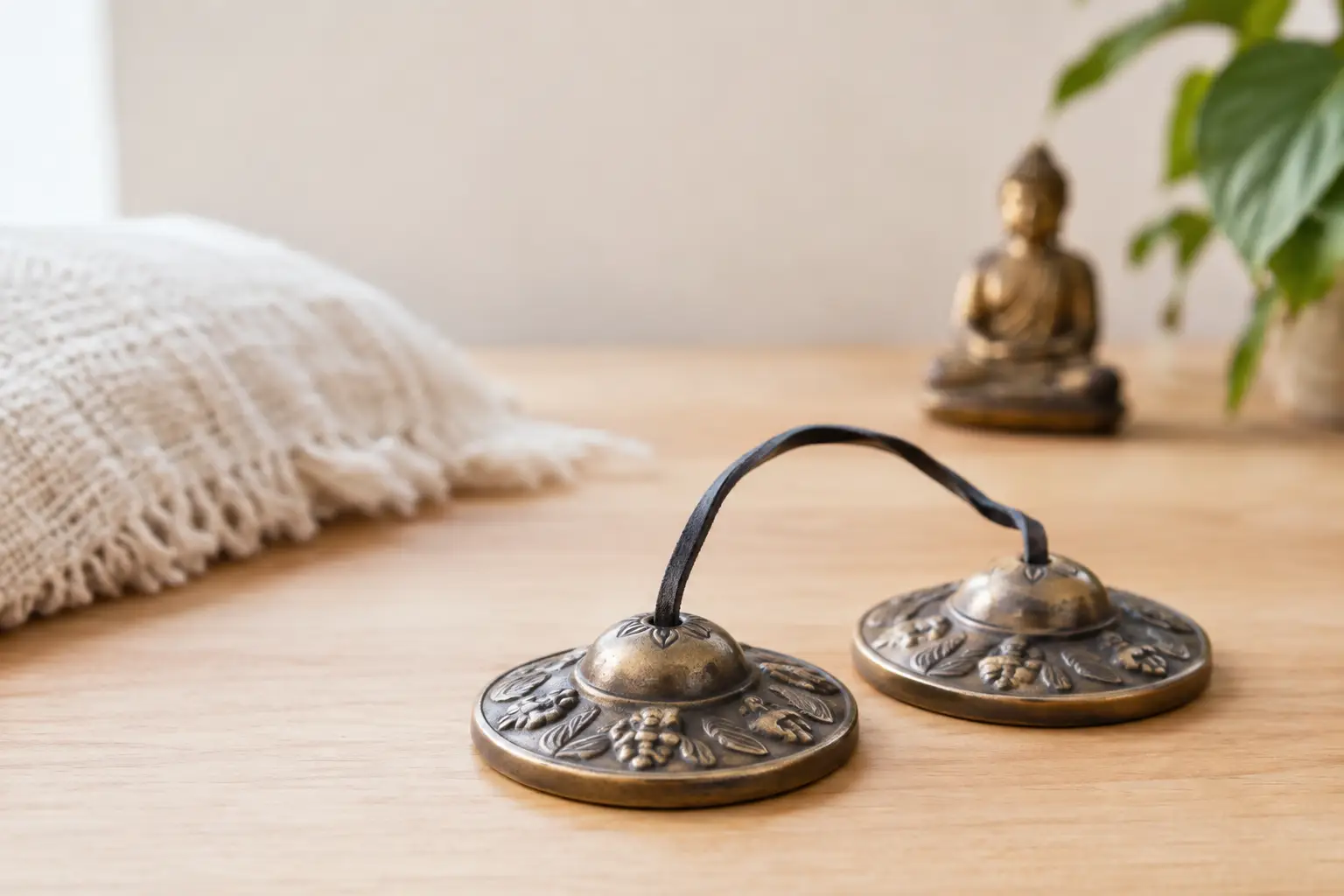
A pair of tingsha bells can change the feeling of a room in a single clear note. At Artisan Goods, we love small, handcrafted objects that make everyday self-care feel more intentional, and learning how to use tingsha bells is wonderfully simple. Whether you are beginning a meditation, refreshing the atmosphere before guests arrive or choosing a thoughtful moment of calm between busy tasks, their bright, lingering sound creates a gentle marker: pause here.
What are tingsha bells used for?
Tingsha are two small metal cymbals joined by a leather cord. Traditionally associated with Tibetan Buddhist practice, they are often used to signal the beginning or end of a ritual, meditation or period of reflection. Their sound is crisp rather than deep, with a long shimmer that can feel especially striking in a quiet home.
Many people use tingsha bells as part of a personal wellness routine. You might ring them before sitting with a singing bowl, lighting a candle, stretching, journalling or simply taking a few steady breaths. Others use them when they want to reset a space after a demanding day. There is no need to treat the bells as a complicated spiritual tool. A clear intention and a little care are more useful than a perfectly choreographed ritual.
Their role will depend on what feels meaningful to you. For some, the sound is a reminder to focus. For others, it is a practical cue that separates work from rest, or signals that a peaceful evening routine has begun.
How to use tingsha bells for a clear sound
The most satisfying tingsha tone comes from a light, deliberate strike. Avoid banging the cymbals together or letting their flat faces collide. That can create a short, harsh clatter rather than the fine, sustained ring tingsha are known for.
Hold one bell in each hand by its cord or strap, allowing the metal to hang freely. Bring the outer edges of the bells together with a gentle, controlled movement, rather like making a small toast with two delicate glasses. As soon as they touch, separate them so each cymbal can vibrate without being muffled.
Listen until the sound fades naturally. This is part of the practice, not empty time between rings. Notice where the tone seems to linger in the room and how your own attention changes as it disappears.
If the note is dull, check that your fingers are not pressed against the cymbals. Oils, moisture and close contact can soften the vibration. A gentle strike is usually enough, particularly in a smaller room. You do not need volume for the bells to feel present.
Begin with one intentional ring
For a short daily ritual, sit or stand comfortably and take a breath before ringing the bells once. Let the sound become the boundary between what came before and what you are doing now. If you have just closed your laptop, for example, one ring can be a simple way to stop carrying the working day into your evening.
Wait for the sound to fade, then continue with your chosen activity. This could be five quiet minutes with a cup of artisan tea, a few yoga stretches or a moment beside a softly scented candle. The bells do not need to be repeated constantly. One well-heard note often feels more grounding than several quick strikes.
Use tingsha at the start and end of meditation
Tingsha bells are particularly useful if you find it difficult to settle into meditation straight away. Ring them once at the beginning, then use the fading sound as something to follow rather than trying to force your mind to become blank. When thoughts pull you away, return your attention to the last traces of the vibration or to your breathing.
At the end of your practice, ring them again before opening your eyes or moving on. This gives the session a clear finish, which can make even a brief meditation feel more complete. If you are meditating with others at home, the bell is also a considerate signal that the quiet time has ended without anyone needing to speak.
Refresh the feel of a room
Some people enjoy using tingsha bells as part of a home-cleansing ritual. This is a personal, symbolic practice rather than a replacement for practical cleaning, opening a window or making a room comfortable. Think of it as tending to the atmosphere after you have tidied, changed the bedding, moved furniture or returned from a stressful day.
Start near the doorway and ring the bells once. Walk slowly around the room, pausing in corners, beside a favourite chair or near the place where you work. Let each ring fade before moving on. You may prefer to set an intention silently, such as welcoming rest, clarity or a fresh start.
This ritual pairs beautifully with gentle home fragrance, but restraint matters. If you are also using a diffuser, incense or a candle, give the room a little space between sensory elements. The bright sound of tingsha is most effective when it has room to be heard.
Creating a tingsha ritual that suits your home
A tingsha practice can be as short as ten seconds or as spacious as an evening ritual. The best approach is one you will actually return to. Instead of saving your bells for a special occasion, keep them somewhere visible but safe: near your meditation cushion, on a shelf with meaningful decorative pieces or beside the items you use to wind down.
Morning use can be energising and clarifying. Ring the bells once before setting your plans for the day, especially if you tend to start quickly and feel scattered. In the evening, their sound can signal a softer pace. Try placing your mobile phone aside, ringing the bells, then taking a few breaths before a bath, a skincare routine or quiet reading.
If you are choosing tingsha bells as a gift, their appeal is in this flexibility. They suit someone building a meditation corner, a friend who appreciates unusual handcrafted homeware, or a person who simply enjoys objects with a story and a sensory presence. Include a note encouraging them to make the ritual their own rather than worrying about getting it right.
Common mistakes when using tingsha bells
The most common mistake is striking too hard. Tingsha do not need force, and a heavy clash can make their tone feel abrupt. Start softly, then adjust only if the room is especially large or there is a lot of background noise.
Another is ringing them repeatedly without allowing the sound to settle. Their beauty lies in the resonance. Treat each ring as an invitation to listen, not as something to fill the silence.
It is also worth being considerate of your surroundings. The sound can travel through walls in a quiet flat or terraced home, and pets may be startled by a sudden high note. Use a lighter touch, choose a time when the household is settled, or take your ritual to a room where you can enjoy it without distraction.
Finally, do not worry if every ring sounds slightly different. Handmade tingsha have character, and your movement, the room and the way the bells are held all affect the note. A little variation is part of what makes the experience feel alive.
Caring for your tingsha bells
Store your bells in a dry place and avoid leaving them where damp air may affect the leather cord or metal finish. After use, wipe them gently with a soft, dry cloth if needed. Harsh cleaning products are rarely necessary and may damage decorative detailing or alter the surface over time.
Try not to drop the cymbals or knock them against hard furniture. Although they are made for ringing, they are still carefully crafted pieces. If the leather connecting cord begins to look worn, handle the bells by the metal bodies while you arrange for the cord to be replaced.
A tingsha bell ritual does not ask for a perfect room, a long meditation or a particular belief. It simply offers a clear sound, a small pause and a graceful way to return to yourself.