
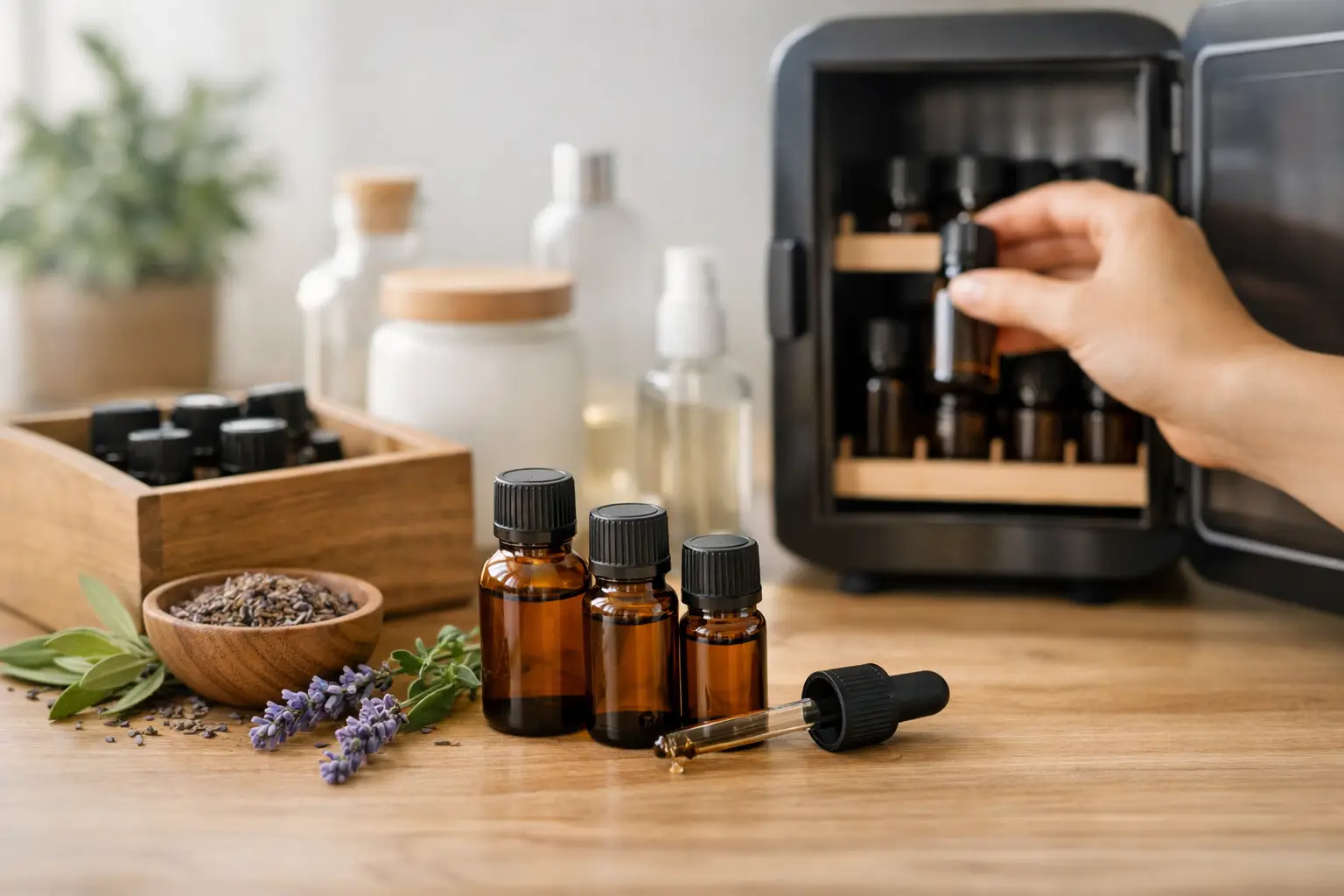
A beautiful essential oil can turn an ordinary evening into a small home ritual – a few drops in a diffuser, a calming bath blend or a comforting scent in your favourite room. Knowing how to store essential oils helps each bottle keep its character for longer, so the aromas you choose from Artisan Goods remain as fresh and enjoyable as possible.
Essential oils are concentrated botanical extracts. Their fragrance and performance can change when they are exposed to light, warmth and air too often. Fortunately, good storage does not require a complicated set-up. A cool, shaded cupboard and a few simple habits will protect your collection well.
How to Store Essential Oils at Home
The best place for most essential oils is a cool, dark, dry cupboard away from direct sunlight. A bedroom cupboard, hallway cabinet or drawer can work well, provided it is not next to a radiator or in a spot that becomes hot during the day.
Keep bottles upright with the cap firmly closed. This reduces the chance of leakage and limits the amount of oxygen reaching the oil. It also prevents the precious contents from coming into prolonged contact with the inside of the cap, which can make opening the bottle more difficult over time.
A dedicated wooden box, lidded basket or small storage case is a lovely way to keep bottles together while shielding them from light. It also makes choosing a scent feel more intentional, whether you are preparing a peaceful evening routine or selecting a thoughtful aromatic gift.
Keep oils away from sunlight
Sunlight is one of the quickest ways to shorten an essential oil’s best life. Ultraviolet light can gradually alter the natural compounds in the oil, changing its scent and reducing its quality. Even a bright windowsill that feels convenient for everyday use is not ideal for long-term storage.
Amber, blue or violet glass bottles offer useful protection, but they are not a reason to leave oils in full sun. Dark glass slows down light exposure; it does not remove the risk altogether. Put bottles back into a cupboard after use rather than displaying them beside a window.
Choose a consistently cool place
Heat encourages evaporation and can speed up oxidation, particularly in citrus oils with their bright, lively notes. Avoid keeping essential oils on a shelf above a cooker, beside a fireplace, near a boiler or in a conservatory. Bathrooms are often tempting because they are used for self-care, but regular steam and changing temperatures make them less suitable for storing a whole collection.
Normal room temperature is generally fine. In a warm home or during a hot British summer spell, a cooler interior cupboard is usually the better choice. Refrigeration is not necessary for most everyday oils, although it can be useful for certain oils if you have a large collection and want to preserve them for longer. If you do refrigerate an oil, allow the bottle to return to room temperature before opening it to reduce condensation around the neck.
Why the Original Bottle Matters
Essential oils should stay in their original glass bottles wherever possible. Glass is stable and does not react with the concentrated oils in the way some plastics can. Darkened glass is especially useful because it provides an extra barrier against light.
Do not transfer oils into clear decorative containers simply for display. If you make a personal blend, use a suitable dark glass bottle and label it clearly with the ingredients and the date it was made. This is particularly helpful for blends intended for diffusers, massage oils or home fragrance rituals, where several scents may otherwise become hard to identify.
The dropper insert should remain in place unless the bottle is designed differently. It helps control the amount used, keeps the opening cleaner and reduces exposure to air. Wipe the neck of the bottle if oil has collected there, then close the cap snugly. There is no need to tighten it excessively.
Keep Air and Moisture Out
Every time a bottle is opened, oxygen enters and begins a slow process called oxidation. This is natural, but repeatedly leaving a cap off will hasten it. Open one oil at a time, measure your drops, and close it before moving on to the next scent.
Water is another consideration. Never dip wet fingers, pipettes or droppers into a bottle of essential oil. Keep bottles away from splashes and store them where children and pets cannot reach them. Essential oils are potent products and should be used only as directed on their packaging.
If a bottle has been left open for several hours, it may still be usable, but check it carefully before adding it to a blend. A noticeably dull, sharp or unfamiliar aroma can be a sign that the oil has changed. When in doubt, it is best not to use an altered oil on the skin.
Organise Your Collection for Everyday Use
A thoughtful arrangement makes it easier to enjoy oils regularly without leaving them scattered around the home. You might group them by scent family, such as fresh citrus, floral, herbaceous, woody and calming blends. Alternatively, arrange them by how you use them: diffuser favourites, evening wind-down scents, bath-time blends and seasonal home fragrance.
For a growing collection, label the base or lid of each bottle with a small sticker. This makes it easy to identify oils when they are stored upright in a box. Add the month and year you opened each bottle too. You will have a clearer sense of which ones to enjoy first, especially oils you reach for less often.
Citrus oils, including lemon, orange, grapefruit and bergamot, tend to be best enjoyed sooner after opening because their delicate top notes can fade more quickly. Woody, resinous and earthy oils often keep their character longer when stored well. Exact longevity depends on the oil, the quality of the seal and storage conditions, so use the supplier’s guidance as your starting point.
Avoid Common Storage Mistakes
The most common mistake is leaving a chosen oil beside a diffuser for weeks at a time. It is convenient, but a warm shelf exposed to daylight is rarely the best home for it. Create a small ritual instead: choose your oil, use it, then return it to its shaded storage place.
It is also worth avoiding loose storage in a handbag, car or holiday suitcase. Cars can become surprisingly hot or cold, and bottles may knock together. For travelling, place oils upright in a padded pouch or small case, make sure each cap is secure, and unpack them when you arrive.
Do not judge an oil only by its colour. Some natural oils vary slightly from batch to batch, and some may deepen with age. Scent is usually the more useful clue. If it smells stale, sour, unusually harsh or significantly different from when you first opened it, replace it rather than trying to disguise it in a blend.
Create a Storage Routine That Feels Good
Essential oil storage is less about perfection and more about protecting the small details that make a self-care moment special. A dark cupboard, closed caps, upright bottles and a little organisation are enough for most homes. Keep your most-used aromas easy to reach, but not permanently on display in heat or sunlight.
When you next choose a scent for a diffuser, bath ritual or quiet moment at home, take an extra few seconds to return the bottle to its proper place. That simple habit helps preserve the aroma you chose it for – ready to bring warmth, calm or a fresh lift to another day.