
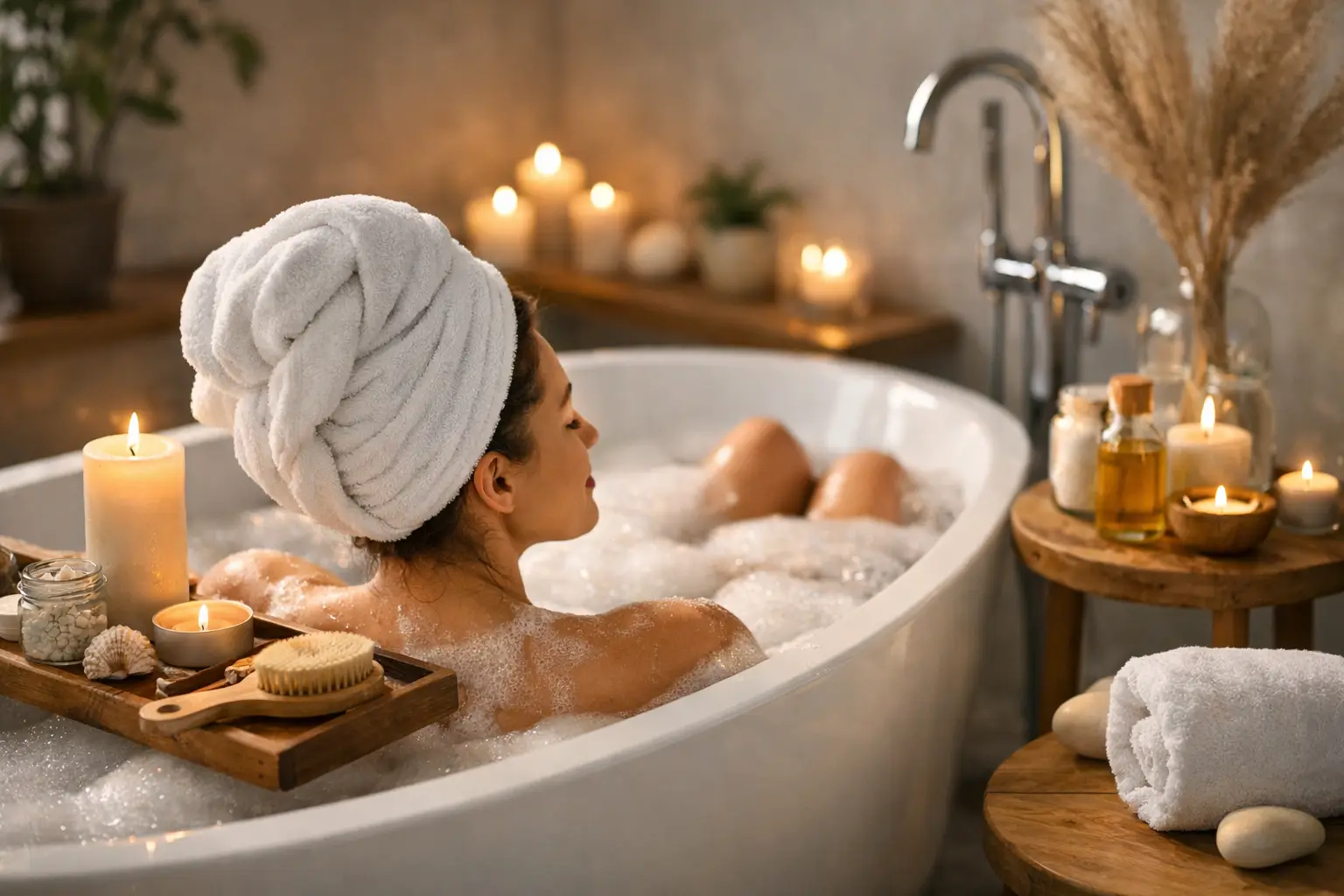
Some baths are just about getting warm. Others change the whole tone of your evening. If you are wondering how to create bath rituals that feel genuinely restorative rather than rushed, the difference usually comes down to intention, atmosphere and choosing a few elements that work well together.
A good bath ritual does not need to be complicated, expensive or overly spiritual. It simply needs to feel considered. That might mean soft candlelight, a favourite essential oil blend, a handmade soap with a scent you associate with calm, or a bath bomb you save for nights when you need a proper reset. The point is not to add more steps for the sake of it. The point is to turn ordinary bathing into a small, repeatable act of care.
What makes a bath feel like a ritual?
The word ritual can sound a little formal, but in practice it is quite simple. A ritual is something you do with purpose and consistency. In bathing, that means creating a sequence that tells your mind and body it is time to slow down.
For some people, that starts before the water is even running. Tidying the bathroom, choosing a candle, picking a scent and laying out clean towels can be enough to shift the mood. For others, the ritual begins once they step into the bath and take the first proper breath of the evening. There is no single right version. What matters is that it feels personal and easy to return to.
This is also where many people overdo it. If your bath ritual needs ten products and forty-five spare minutes, it may become something you rarely manage. A simpler setup often works better. One or two bath products, one scent direction, and a calm setting is usually enough.
How to create bath rituals that suit your routine
The best bath ritual is one you will actually want to repeat. That is why it helps to begin with timing rather than products. Ask yourself when baths realistically fit into your week. A Sunday evening soak will look different from a quick midweek wind-down.
If your schedule is busy, keep it light and practical. A warm bath, a bath bomb or aromatic salts, and a candle may be all you need. If you have more time, you can build a fuller experience around it with body oils, soothing music, tea or a few quiet minutes afterwards instead of heading straight back to chores.
It also helps to think about what you want from the ritual. Do you want to feel sleepy, comforted, uplifted or simply less overstimulated? Scents, textures and lighting all affect that. Lavender and softer herbal notes tend to suit evening routines, while citrus, mint or brighter blends can feel fresher and more reviving. Warmer scents can feel cocooning in colder months, while lighter florals often suit spring and summer.
Start with the atmosphere
A bath ritual is as much about the room as the water. If the bathroom feels cluttered, cold or harshly lit, it is harder to settle. You do not need a spa-like space, but a few small changes can make a noticeable difference.
Lighting matters most. Bright overhead lighting can keep the room feeling functional rather than restful, so candlelight is often the easiest way to soften everything. Even one or two candles can change the atmosphere immediately. Home fragrance also has a role here, but keep the scent profile coherent. If your bath product is rich and floral, a very sharp or smoky candle may clash.
Texture helps too. Fresh towels, a bath mat that feels soft underfoot, and a robe or comfortable nightwear ready for afterwards all make the experience more complete. These details sound minor, but they remove the abrupt feeling that can happen when a relaxing bath ends in a chilly, disorganised dash around the house.
Choose bath products with a clear purpose
When deciding how to create bath rituals, product choice matters less than product fit. A handmade soap, bath bomb, salts or essential oil blend should support the feeling you want, not compete for attention.
Bath bombs are often the easiest way to make an ordinary bath feel more indulgent. They add scent, colour and a sense of occasion with very little effort. If you prefer something subtler, bath salts can feel grounding and uncomplicated. Soaps can become part of the ritual too, especially if you choose one with a scent and texture that feels distinct from your everyday shower routine.
Essential oils can work beautifully, but balance matters. More is not always better. Strong fragrance can become distracting rather than soothing, particularly in a hot room. If you are using several scented items together, let one lead and keep the others gentle.
There is also a practical side to consider. If you have sensitive skin, heavily fragranced combinations may not be the best choice. In that case, focus more on atmosphere, texture and heat. A calm ritual can be built from very simple components.
Build a sequence, not just a bath
What turns a bath into a ritual is often the order of things. A sequence creates familiarity, and familiarity helps the body relax more quickly.
You might begin by running the water and lighting a candle. Then add your chosen bath product, dim the room, and leave your mobile phone elsewhere. Once in the bath, take a minute to slow your breathing before doing anything else. After bathing, use a body oil or moisturiser, put on something soft, and move into the rest of your evening more gently.
That sequence does not have to be long. Even a short pattern repeated regularly can become a cue that the day is winding down. If you are someone who struggles to switch off, this can be more useful than trying to force relaxation once you are already tense.
Add sensory details carefully
A memorable bath ritual usually engages more than one sense, but restraint is what keeps it feeling elegant rather than chaotic. Scent is the obvious starting point, yet sound and touch matter just as much.
Some people like silence. Others prefer soft music, a singing bowl beforehand, or simply the sound of water and candle flame. There is no need to perform calm in a particular way. If a silent bath feels awkward, a gentle audio backdrop may help. If music makes your mind busier, leave it out.
Touch comes through temperature and texture. Water that is too hot can leave you feeling drained rather than restored, so aim for warm and comfortable instead of intense. Afterwards, a nourishing body product or a well-made soap can carry the ritual beyond the bath itself.
Visual detail plays a part too. Artisan bath and body pieces often make a ritual feel more intentional because they look and feel distinct from everyday essentials. That can be especially lovely if you are buying for yourself but also makes these products thoughtful gifts for someone who would appreciate a more elevated evening routine.
Make it seasonal and giftable
One of the easiest ways to keep bath rituals feeling fresh is to adjust them with the seasons. In winter, richer scents, deeper candlelight and cocooning textures tend to feel right. In warmer months, lighter florals, cleaner herbal blends and a simpler setup often work better.
This is also why bath ritual items make such good gifts. They feel personal without being overly complicated, and they suit many occasions, from birthdays to Christmas or a quiet thinking-of-you gesture. A candle, bath bomb, soap and essential oil blend can help someone create a routine that feels meaningful rather than purely practical.
If you are shopping with that in mind, it helps to think about the recipient’s taste rather than choosing what looks most dramatic. Some people love bold fragrance and colour. Others prefer understated scents and a cleaner, calmer look. The most successful bath ritual gifts feel considered, not generic.
How to keep bath rituals realistic
The most beautiful ritual is not always the one with the most elements. It is the one that fits your life. If you treat bath rituals as something reserved only for your most organised evenings, they can start to feel out of reach.
Instead, think in layers. Your simplest version might be a warm bath and candle. Your fuller version might include bath products, body care, a cup of artisan tea and ten quiet minutes afterwards. Both count. Both can be restorative.
This flexible approach also makes it easier to enjoy what you have. You do not need to wait for a special occasion to use the lovely soap or save every bath bomb for some future perfect evening. Small rituals work best when they belong to real life.
If you are learning how to create bath rituals, start with one mood, one scent family and one or two products you genuinely enjoy. Then let the routine grow around what makes you feel calmer, warmer and more at home in your own space. The nicest rituals are rarely the most elaborate. They are the ones you look forward to before the taps are even on.