
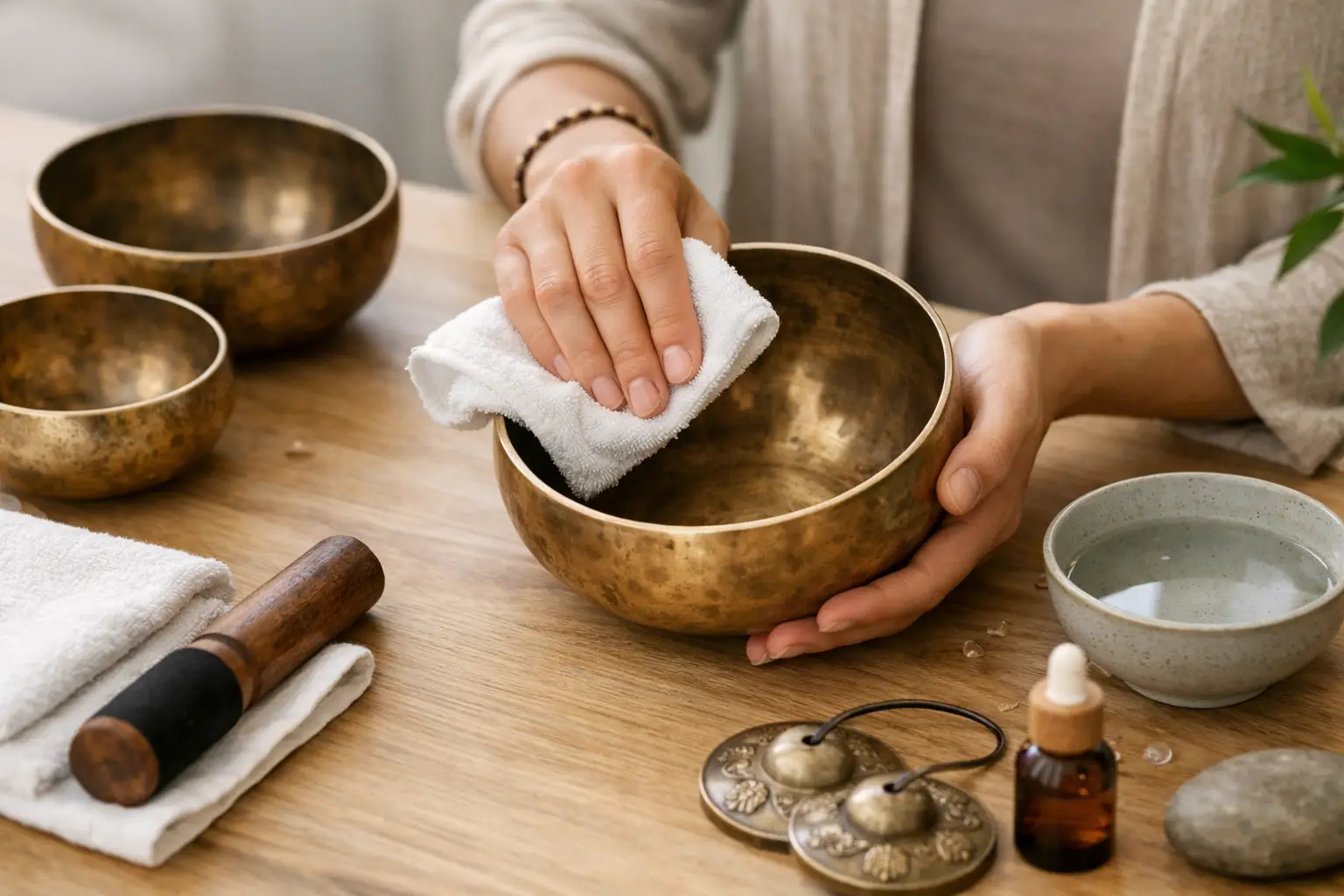
A singing bowl often becomes part of the rhythm of home – a few quiet minutes before bed, a pause after a busy day, or a thoughtful centrepiece for a wellbeing space. At Artisan Goods, we believe knowing how to clean singing bowls properly helps protect both their handcrafted finish and the clear, resonant sound that makes each bowl so special.
The best method is usually the gentlest one. Most traditional singing bowls are made from metal alloys, often with a warm brass-like finish, and they do not need aggressive polishing to look cared for. A little regular attention will remove dust, fingerprints and residue without stripping away their natural character.
Start by identifying your singing bowl
Before cleaning, consider what your bowl is made from and how it is decorated. Traditional metal singing bowls can normally be cleaned with a soft, dry cloth and occasional mild soap. However, bowls with painted symbols, etched details, coloured finishes or antique-style patina need more restraint. Strong cleaners and polishing pastes can fade decorative details or create uneven bright patches.
Crystal singing bowls need a different approach again. They should be cleaned with a soft microfibre cloth and only a small amount of water if needed. Avoid sudden changes in temperature, which may put unnecessary stress on the material.
If you are unsure, treat your bowl as a delicate decorative object rather than kitchenware. Clean lightly, use as little moisture as possible and test any new method on a discreet area first.
How to clean singing bowls for everyday care
For most bowls, dry cleaning is all that is required. Use a clean, soft microfibre cloth to wipe the inside, outside and base. This lifts dust without scratching the surface, and it is particularly useful before a meditation, sound ritual or display refresh.
Hold the bowl securely in one hand or rest it on a folded towel while you clean. Be gentle around the rim, as this is the area most often touched by hands and struck with a mallet. Avoid rubbing hard in one spot, especially where there are engraved patterns.
A soft, dry brush can help remove dust from detailed motifs or around the foot of the bowl. Choose a brush with very soft bristles and use a light touch. The aim is simply to loosen dust, not to scour the metal.
For a bowl used frequently, wiping it after use is a simple habit worth keeping. Natural oils from fingers can gradually dull the shine, particularly on highly polished surfaces. It also means you will rarely need to use anything more than a cloth.
When a damp cloth is enough
If your singing bowl has smudges or feels slightly sticky, lightly dampen a soft cloth with lukewarm water. Wring it out thoroughly so it is barely moist, then wipe the affected area. Follow immediately with a second, dry cloth until no moisture remains.
Do not run the bowl under a tap, immerse it in water or leave it to air-dry. Water can settle into fine engraving, around the base or in tiny surface marks. Over time, this may encourage tarnish or leave water spots.
Removing marks without harming the finish
For more persistent marks, add one tiny drop of mild washing-up liquid to a bowl of lukewarm water. Dampen a cloth with the solution, wring it out well and clean a small area at a time. Wipe once more with a separate cloth dampened only with water, then dry the bowl straight away.
This method is suitable for plain metal bowls in good condition, but it is not always right for every finish. Skip soap if your bowl has painted artwork, a deliberately aged appearance, loose decorative elements or a finish that seems delicate. A dry cloth is safer in these cases.
Avoid abrasive sponges, scouring pads, rough paper towels and stiff brushes. They can leave fine scratches that catch the light and make a handmade surface look patchy. Household cleaners containing bleach, ammonia or strong acids are also best kept away from singing bowls.
It can be tempting to use lemon juice, vinegar or a metal-cleaning product when tarnish appears. These can brighten bare metal, but they may also remove a soft patina that suits the bowl, affect engraved areas or leave residue that changes the surface over time. A bowl does not have to look newly polished to be beautiful or well cared for.
Should you polish a tarnished singing bowl?
Tarnish is a natural reaction between metal and air. It is not a sign that your singing bowl is unclean, and a little mellowing can add depth to a handcrafted piece. Whether to polish it is largely a matter of preference.
If you prefer a brighter finish, choose a gentle metal polish made for the specific alloy where possible, and follow its instructions carefully. Apply the smallest amount to a soft cloth rather than directly onto the bowl. Work slowly, avoid decorated areas and buff away every trace with a clean cloth.
Polishing should be occasional, not part of weekly care. Over-polishing can create an unnaturally uniform shine and may gradually soften fine etched details. For an older bowl, one with meaningful markings, or a piece with a rich antique finish, preserving the patina is often the better choice.
After any polish, leave the bowl for a little while before playing it. Then wipe the rim and interior again with a dry cloth to make sure no product remains where your mallet will make contact.
Keep water and fragrance away from the inside
A singing bowl can look lovely as part of a home ritual, but it is not designed to hold water, essential oils, wax or incense ash. These can leave staining, residue or scents that are difficult to remove. Oils in particular may sit in tiny surface textures and attract dust.
If a small amount of oil or wax has reached the bowl, do not scrape it with a metal tool. Let wax fully harden, then lift it carefully with a fingernail or a soft wooden edge. Follow with a barely damp, mildly soapy cloth if necessary, then dry thoroughly.
When using candles, incense or an oil diffuser nearby, give the bowl a little space. This helps prevent smoke film, splashes and heat from affecting its finish. A tray, shelf or small display cloth can create a calm arrangement while keeping each item protected.
Drying, storage and handling make a difference
Once cleaned, dry your bowl with a soft cloth inside and out. Leave it on a clean towel for a few minutes if you have used any moisture, but do not place it near a radiator or other direct heat source. Gentle, room-temperature drying is best.
Store the bowl in a dry place away from constant humidity. If it is displayed on a shelf, place a soft ring, folded cloth or purpose-made cushion beneath it. This helps protect the base and reduces the chance of accidental knocks when reaching for other homeware.
Try not to stack bowls directly inside one another unless they have soft padding between them. Metal-on-metal contact can cause scratches, and pressure on the rim can affect the shape of finer bowls. Carry a larger bowl with both hands, supporting the base rather than gripping only the edge.
A quick sound check after cleaning
After cleaning and drying, play the bowl gently with its usual mallet. There is no need to strike it hard. Listen for the familiar clarity and sustain, then check that the rim feels dry and free from residue.
Cleaning should not change the voice of a well-made bowl. If it sounds muted straight after a damp clean, it may simply need more drying time. Give it a final wipe, allow it to rest at room temperature and try again later.
A softly dusted, carefully handled singing bowl will retain the marks of its making while remaining ready for quiet moments of reflection. Let its natural finish tell its story, and reserve deeper cleaning for the occasions when it genuinely needs it.