
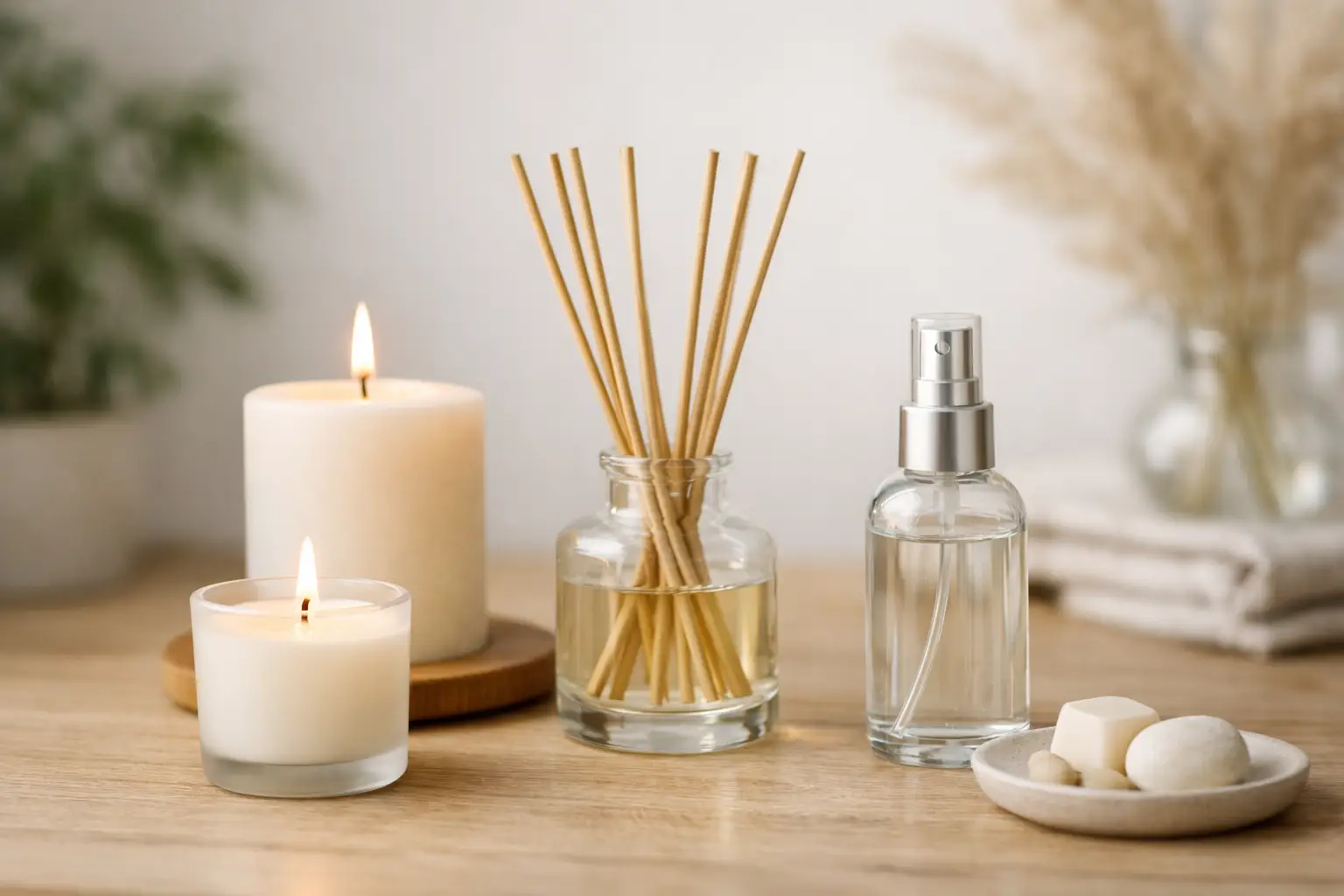
A home can look beautifully put together and still feel unfinished if every room smells the same, or if scents compete the moment you walk through the door. This guide to home fragrance layering from Artisan Goods is about creating a gentle flow from room to room: welcoming at the entrance, comforting where you rest, and fresh where you begin the day. It is less about making fragrance stronger and more about making it feel considered.
What is home fragrance layering?
Home fragrance layering means using more than one scent format, or complementary fragrance families, to build atmosphere throughout your space. A reed diffuser may provide a soft background scent, while a candle adds warmth in the evening and a few drops of essential oil bring a more focused aromatic moment when needed.
The aim is not to have every fragrance noticeable at once. Think of it as furnishing a room. Your larger pieces establish the mood, then smaller details add character. A diffuser can be the steady base, a candle the cosy centrepiece, and a room spray or essential oil blend the finishing touch.
Layering works especially well in homes where different rooms serve different purposes. The scent that helps a bathroom feel clean may not suit a bedroom meant for winding down. Giving each space its own gentle identity makes everyday routines feel more restorative.
Start with one fragrance family
The easiest way to make a layered home smell balanced is to begin with a fragrance family rather than a single exact scent. You do not need every product to match precisely. In fact, a house full of one scent can feel flat. What matters is that the notes sit comfortably together.
Fresh and uplifting scents often include citrus, mint, eucalyptus or light herbal notes. They are well suited to kitchens, utility areas and hallways, where they create a clear, just-aired feeling. Floral notes such as lavender, rose, geranium and jasmine can feel soft and welcoming, depending on how sweet or green the blend is.
For a warmer atmosphere, choose notes such as sandalwood, patchouli, cedarwood, vanilla, amber or gentle spice. These are particularly lovely in living rooms and bedrooms, where candlelight and slower evenings make richer fragrance feel at home. Earthy scents can also pair beautifully with handmade décor, natural textiles and wellness-inspired spaces.
If you are unsure where to begin, choose one leading note you already enjoy. Lavender can be paired with citrus for freshness or with woody notes for calm. Orange works well with spice, floral notes and woods. Sandalwood gives floral and herbal blends more depth. A shared note, even a subtle one, helps different products feel connected.
Build your fragrance in three layers
The background layer: a diffuser
A reed diffuser is ideal for the fragrance you want people to notice without having to think about it. It is a simple, low-effort way to establish a room’s character throughout the day. Place one in a hallway, bathroom or living area and allow it to become the quiet thread that ties the space together.
Choose lighter, cleaner blends for smaller rooms. In a compact bathroom, a powerful sweet or smoky scent may quickly feel too much. In a larger sitting room, a more rounded floral, woody or spiced diffuser can hold its own without becoming overwhelming. Turn reeds sparingly if the fragrance feels intense, and keep them away from direct heat and sunny windowsills, which can shorten the life of the liquid.
The heart layer: a candle
Candles create the emotional centre of fragrance layering. Their scent is more intentional because you choose when to light them. This makes them perfect for evenings, visitors, quiet reading time or a slow weekend reset.
Instead of matching your candle exactly to your diffuser, choose one that adds a related note. A citrus-herbal diffuser can sit beautifully with a warmer orange and spice candle. A lavender-led background fragrance may feel more luxurious beside a candle with soft woods or gentle florals. The two should feel like they belong in the same home, not like they are competing for attention.
Keep the room size in mind. A richly fragranced candle can be wonderful in an open living space, but in a bedroom a lighter option often feels more restful. Trim the wick before each use and allow the wax to melt evenly across the surface on early burns, following the candle’s care guidance. This helps the candle perform at its best and keeps the ritual enjoyable.
The finishing layer: essential oils
Essential oils are the most flexible part of the ritual. Used in an oil burner or diffuser, they let you tailor the mood to the moment. You may prefer a bright citrus blend while tidying, soothing lavender before bed, or a grounding combination of wood and spice during a quiet evening.
This is where restraint matters. Start with a small number of drops and give the fragrance time to settle before adding more. Essential oils are concentrated, and a blend that smells delicate in the bottle can become much stronger once warmed or dispersed. Always use them according to product guidance and keep them out of reach of children and pets.
A room-by-room guide to home fragrance layering
Your hallway sets the first impression, so keep it uncomplicated. A fresh or softly floral diffuser works well here, while a candle can be lit shortly before guests arrive if you would like a warmer welcome. Avoid placing several fragranced products together in this smaller transitional space.
In the living room, you can afford more depth. Let a diffuser create the base, then use a candle when you want the room to feel settled and inviting. Woody, amber, floral and lightly spiced notes are often a natural fit here, particularly alongside textured throws, artisan pieces and evening light.
Bedrooms benefit from the quietest approach. Choose one gentle fragrance source rather than several. Lavender, soft floral notes and mellow woods are popular choices because they support a calmer end-of-day routine. If you enjoy using essential oils, use them earlier in the evening rather than making the scent too prominent at bedtime.
Bathrooms are well suited to a reliable diffuser with clean, herbal or fresh notes. Here, fragrance can complement the small rituals that make a daily routine feel more cared for: a beautifully scented soap, a bath treat and fresh towels. If the room is small, a subtle diffuser is usually enough.
Kitchens need a different kind of balance. Strong food aromas can clash with perfume-heavy scents, so fresh citrus, herbs or green notes tend to work best. Use fragrance after cooking rather than trying to cover cooking smells while they are still in the air. Opening a window first will make any chosen scent feel clearer and more pleasant.
When scents clash, simplify
The most common layering mistake is adding fragrance to solve a fragrance problem. If a room smells muddled, do not light another candle. Pause, air the room and return to one product at a time.
Sweet vanilla, dense florals, heavy smoke and powerful spice can all be beautiful, but they need room to breathe. If you love a bold candle, pair it with a quieter diffuser. If your essential oil blend is rich and resinous, use it as the main event and skip other scented products for that evening.
Season can guide your choices too. In spring and summer, lighter citrus, botanical and floral blends often suit open windows and brighter rooms. As autumn and winter arrive, many homes feel inviting with woods, warm spice and deeper amber notes. There is no fixed rule, though. The fragrance that makes you feel comfortable in your own space is the right one.
Make it part of your home ritual
Home fragrance layering is most rewarding when it follows the rhythm of your life, rather than becoming another thing to manage. Refresh a diffuser when its scent has faded, light a candle when you have time to enjoy it, and bring out essential oils when you want to shape a particular moment. A few thoughtful choices can make a familiar room feel newly comforting, ready for everyday pauses, thoughtful hosting and the small pleasures of being at home.