
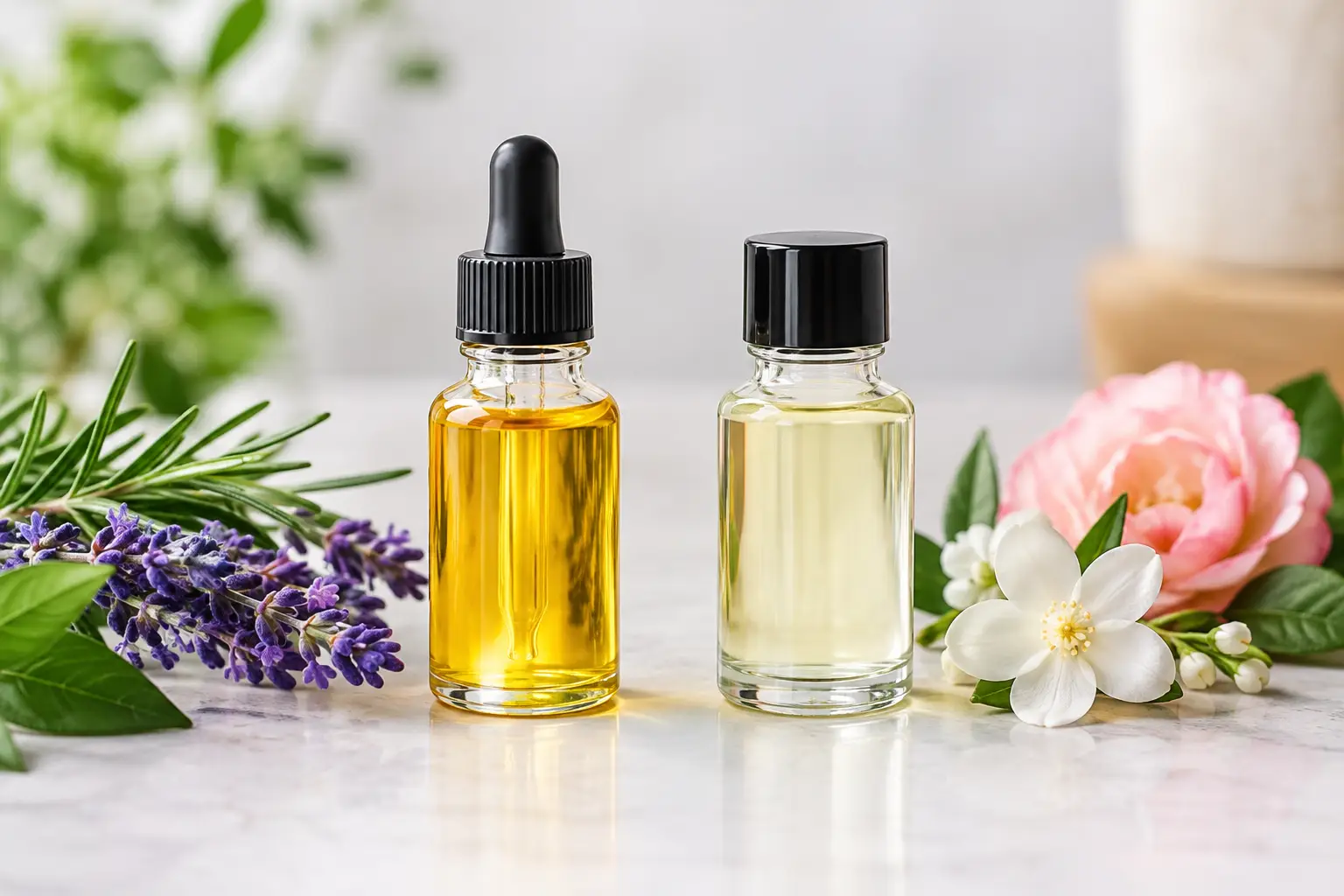
A room can smell like freshly picked lavender, warm winter spice or a sunlit citrus grove – but the bottle behind that scent matters. When choosing essential oil vs fragrance oil, the best option depends on how you plan to use it, the atmosphere you want to create and whether you value a botanical aroma or a more lasting, imaginative scent. At Artisan Goods, home fragrance is all about finding small sensory details that make daily rituals feel more considered.
Essential oil vs fragrance oil: the key difference
Essential oils are concentrated aromatic extracts from plants. They may be distilled from leaves, flowers, peel, bark, roots or resin. Lavender essential oil, for example, is extracted from lavender flowers, while sweet orange essential oil comes from the fruit peel. Their scent is shaped by the plant itself, so variations between harvests are normal.
Fragrance oils are created to produce a particular aroma. They can contain natural aromatic materials, synthetic scent components or a combination of both. A fragrance oil might capture a recognisable botanical note, such as rose or sandalwood, but it can also recreate scents that cannot be distilled from a plant in the same way, from linen and sea salt to baked pear, incense or sparkling prosecco.
Neither is automatically the better choice. Essential oils suit people looking for recognisably plant-led aromas and simple aromatherapy rituals. Fragrance oils are often the more practical choice when you want a scent with greater depth, consistency and staying power in a candle, wax melt or home fragrance product.
What essential oils bring to a home ritual
The appeal of an essential oil lies in its direct connection to the natural world. Eucalyptus can feel crisp and clearing on a cold morning, while lavender is a familiar choice for an evening wind-down. Citrus oils bring a bright, freshly cleaned feeling to kitchens, hallways and workspaces. Frankincense, patchouli and cedarwood create a more grounded, contemplative mood for meditation or quiet moments at home.
Because essential oils are complex plant extracts, they rarely smell exactly the same as a perfume, candle or bath product labelled with the same note. A real bergamot oil, for instance, may be greener and more nuanced than the sweet citrus scent someone expects from a room spray. That honesty is part of their charm, but it is worth knowing before you buy.
Essential oils also tend to evaporate at different rates. Lighter notes such as lemon and grapefruit can smell wonderfully fresh but may not linger as long in open air. Wood, resin and spice oils usually feel more persistent. For a diffuser blend, combining a bright top note with a deeper base note can make the fragrance feel more rounded.
Essential oils need thoughtful handling
Natural does not mean risk-free. Essential oils are highly concentrated and should not be applied neat to skin, swallowed or added directly to bath water. If using oils on the body, they need to be correctly diluted in a suitable carrier oil and patch tested first. Some oils are unsuitable during pregnancy, for young children, for particular health conditions or around pets.
For a water-based diffuser, use only oils and quantities approved by the diffuser manufacturer. Keep bottles away from children, avoid contact with eyes and always follow the individual product guidance. A carefully used essential oil can be a lovely addition to a self-care routine, but safe use comes before a stronger scent.
Why fragrance oils are so popular for home fragrance
Fragrance oils give makers and home fragrance lovers more creative range. They can deliver a clean cotton aroma, a complex floral bouquet or a cosy blend of vanilla, amber and spice with a consistency that is difficult to achieve using plant extracts alone. This makes them especially useful in scented candles, wax melts and decorative home fragrance where the aim is to create a clear, lasting character.
They are often formulated with a specific purpose in mind. A fragrance designed for candle making may be tested for how it performs in wax, both cold and when burning. This matters because heat changes scent. An essential oil that smells beautiful straight from the bottle may lose its brightness or throw less effectively when used in a candle.
That does not make fragrance oil inferior. It simply means it has been designed for a different job. If you are choosing a gift for someone who loves a distinctive, long-lasting room scent, a carefully made fragrance-led candle can be a more satisfying choice than a botanical oil that fades quickly.
Fragrance oil is not one fixed ingredient
The label “fragrance oil” covers a broad category. Its precise composition will vary depending on the scent and the intended product. Responsible suppliers formulate products for their stated use and provide safety information, including allergen guidance where required.
It is still wise to treat fragrance oils with care. Do not assume that a fragrance oil is suitable for skincare, bath use or a diffuser simply because it smells appealing. Use it only in the format and at the dilution level specified by the manufacturer. A fragrance oil made for a wax burner is not automatically suitable for direct skin contact.
Choosing the right oil for diffusers, candles and baths
For an ultrasonic diffuser, essential oils are usually the natural fit, provided the appliance instructions permit them. Choose a single oil when you want a straightforward scent, or blend complementary notes for a more personal result. Lavender with cedarwood feels soft and restful, while orange with frankincense creates a warm, welcoming atmosphere for a sitting room.
For candles and wax melts, it depends on the finished product rather than a simple essential oil versus fragrance oil rule. Both may be used by makers, but fragrance oils are commonly chosen for reliable scent throw and more varied fragrance profiles. Buy finished candles and melts from makers who state how to enjoy them safely, and never add extra oil to the wax yourself.
For baths, select a product that has already been formulated for bathing, such as a bath bomb, soap or bath soak. Adding drops of essential oil or fragrance oil straight into water is not a substitute. Oil and water do not mix, leaving concentrated droplets that can sit on the skin and cause irritation.
For wax burners, follow the instructions for the burner and the chosen wax melts or approved oil. Keep flames away from drafts and never leave a burner unattended. The most beautiful scent is not worth compromising a calm evening for.
Scent, values and expectations
Choosing between the two is also about the experience you want. Essential oils feel botanical, often quieter and less predictable. They suit those who enjoy herbal, citrus, woody and floral plant notes as they naturally occur. They can make a morning shower, yoga practice or bedtime routine feel gently intentional.
Fragrance oils are ideal when atmosphere is the priority. They make it possible to enjoy layered, evocative scents that set a scene: a cosy evening, a freshened guest room, a celebratory table or a thoughtful birthday present. Their creative range can be especially appealing when selecting home fragrance for someone whose favourite scents are more about memories and mood than a particular plant.
Ethical shopping deserves nuance here, too. “Natural” alone does not tell you everything about environmental impact, sourcing or suitability. Essential oils require large quantities of plant material, and responsible cultivation matters. Fragrance oils may use synthetically produced components, which can reduce pressure on scarce natural materials in some cases. Look for clear product information, safe-use guidance and makers who are open about what their products are designed to do.
A simple way to decide
Choose essential oil when you want a true plant-derived aroma for a diffuser or a carefully guided aromatherapy-inspired ritual. Choose fragrance oil, usually within a finished candle, wax melt or other purpose-made home fragrance, when you want a particular scent story and dependable room-filling character.
There is room for both on a thoughtful shelf at home. Let the occasion lead: a botanical blend for a quiet pause, a richly scented candle for guests, or a beautifully chosen bath and body treat when someone deserves a little everyday indulgence. The best fragrance is the one that feels right in the moment and is used with care.