
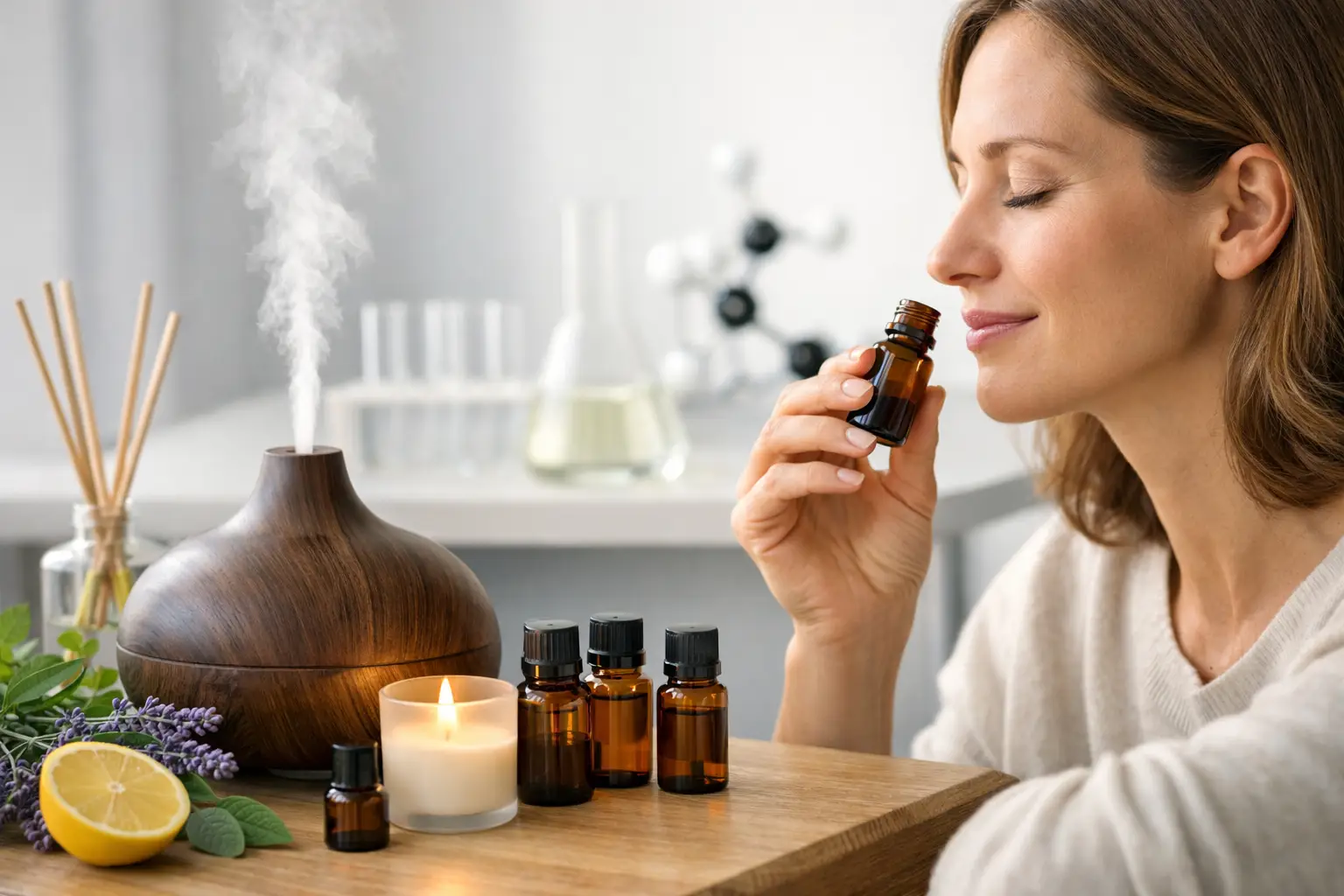
A warm bath, a favourite candle and a gentle scent drifting through the room can make an ordinary evening feel deliberately calmer. At Artisan Goods, we know these small sensory rituals are part of why people reach for essential oils, diffusers and home fragrance. But does aromatherapy work in a meaningful way, or is it simply a pleasant pause in a busy day? The most honest answer is that it can support wellbeing for some people, especially around relaxation, mood and sleep routines, but it is not a cure-all and the results are personal.
Does aromatherapy work for stress, sleep and mood?
Aromatherapy uses fragrant plant extracts, usually essential oils, to influence how we feel. The most familiar method is inhalation: scent molecules travel through the nose and interact with areas of the brain involved in emotion, memory and alertness. This is one reason a fragrance can feel instantly comforting or transport you back to a particular place.
Research suggests that certain aromas may help some people feel less tense in the moment, more settled before sleep, or more at ease during an anxious situation. Lavender is the best-known example and is widely associated with relaxation. Peppermint and citrus scents are often chosen for a fresher, more awake atmosphere, while floral and woody notes can make a room feel softer and more restful.
The evidence is encouraging in places, but it is not uniform. Studies vary in quality, use different oils and doses, and often involve small groups of people. A scent that helps one person unwind may do little for another, or may even be unpleasant. Aromatherapy is most useful when viewed as a supportive ritual rather than a treatment that can replace professional medical care.
There is also a practical reason it can feel effective: using a diffuser or lighting a candle creates a cue to slow down. If you use the same calming fragrance while reading, bathing or preparing for bed, your mind may begin to associate that scent with rest. The fragrance matters, but so does the routine you build around it.
What aromatherapy can realistically help with
Aromatherapy is often at its best when the aim is modest and specific. It may help create a more peaceful bedroom routine, make a bath feel restorative after a long day, or add a comforting sense of occasion when you are taking time for yourself. It can also make a thoughtful addition to a wellbeing-focused present, particularly for someone who enjoys creating a welcoming home.
For stress, its role is usually about helping you feel calmer rather than removing the cause of stress. A quiet ten minutes with a familiar scent may lower the sense of rush and give you space to reset. That is worthwhile, even if the oil itself is not solving a difficult workload, poor sleep pattern or ongoing worry.
For sleep, fragrance can be part of a wind-down ritual. A soft lavender, chamomile-like or gentle floral blend in the hour before bed may signal that screens, chores and decisions are finished for the evening. However, if sleep problems are frequent, severe or affecting everyday life, it is sensible to speak with a healthcare professional rather than relying on scent alone.
For mood, the benefits can be immediate but short-lived. Bright citrus aromas may make a kitchen or workspace feel lighter; grounding scents can suit a quiet sitting room; and a comforting fragrance can help a home feel more like your own. This is less about a guaranteed chemical switch in the brain and more about choosing an environment that supports the way you want to feel.
Why scent is so personal
Fragrance is never one-size-fits-all. Lavender may be relaxing for many people, but someone who associates it with a strong toiletry scent or a childhood memory may not enjoy it at all. The same applies to rich florals, spices, resinous notes and crisp herbs.
Personal preference is not a flaw in aromatherapy – it is part of how it works. If an aroma feels comforting, fresh or familiar to you, you are more likely to make space for the ritual and benefit from the pause it creates. Choose scents that you genuinely want to return to, rather than forcing yourself to like the oil that is most often recommended.
It also helps to think about the setting. A lively citrus fragrance may suit a morning shower or an afternoon tidy-up, whereas a gentler floral, woody or lavender-led aroma may feel better for an evening bath. In a small room, a little fragrance goes a long way. Overpowering scent can cause discomfort rather than calm.
How to use essential oils more thoughtfully
The simplest approach is often the most enjoyable. Add essential oil to a suitable diffuser according to its instructions, and begin with a modest amount. Let the scent gently fill the room rather than aiming for a perfume-shop intensity. You can use a diffuser for a short period while you read, stretch, meditate or settle down for the night.
A bath can be another lovely setting for aromatherapy, but pure essential oils should not simply be dropped straight into the water. Oil and water do not mix, which means undiluted droplets can sit on the skin and cause irritation. Choose bath products designed for use in water, or ensure an essential oil is properly diluted in an appropriate carrier product before use.
For a low-fuss home ritual, scented candles, wax melts and room fragrance can create a similar atmosphere without requiring you to blend oils yourself. Their wellbeing value is still rooted in the experience: the scent, the softer lighting, the decision to pause and the feeling of caring for your space.
If you are trying a new fragrance, use it for a few evenings before deciding whether it suits you. One rushed Monday night is not the fairest test. Notice whether it helps you slow down, whether you find yourself looking forward to using it, and whether the aroma still feels pleasant after ten or fifteen minutes.
Safety matters as much as the scent
Natural does not automatically mean harmless. Essential oils are concentrated substances, and they should be treated with care. Never ingest them unless specifically directed by a qualified healthcare professional, and avoid applying them undiluted to skin. Keep bottles away from children and store them securely.
If you want to use a diluted oil on your body, carry out a patch test first and stop using it if you experience redness, itching, stinging or discomfort. Take extra care if you are pregnant, breastfeeding, have asthma, allergies, a skin condition or a medical condition, or are taking prescribed medication. Advice from a pharmacist, midwife, GP or qualified practitioner is a sensible starting point in these circumstances.
Be mindful of everyone sharing your home. Some people are sensitive to fragrance, and pets can be more vulnerable to concentrated oils than humans. Use diffusers in well-ventilated spaces, avoid running them continuously and make sure animals can leave the room. With candles, follow the usual fire-safety basics: place them on a heat-resistant surface, keep them away from drafts and never leave them burning unattended.
Making aromatherapy part of an everyday ritual
The most rewarding way to use aromatherapy is to attach it to a moment you already want to protect. It could be five quiet minutes before getting dressed, a bath at the end of the week, or the half-hour before bed when you put your mobile phone aside. Keep the ritual easy enough that it feels like a treat, not another item on the list.
You might reserve one scent for bedtime and another for welcoming guests, or choose a candle that makes a Sunday afternoon at home feel warmer. These details can turn practical rooms into places where you want to linger. They can also make beautifully personal gifts because fragrance carries mood, memory and a sense of care.
Aromatherapy does not need to promise more than it can deliver to be valuable. Choose a scent you love, use it safely, and let it mark a little pocket of calm in your day.