
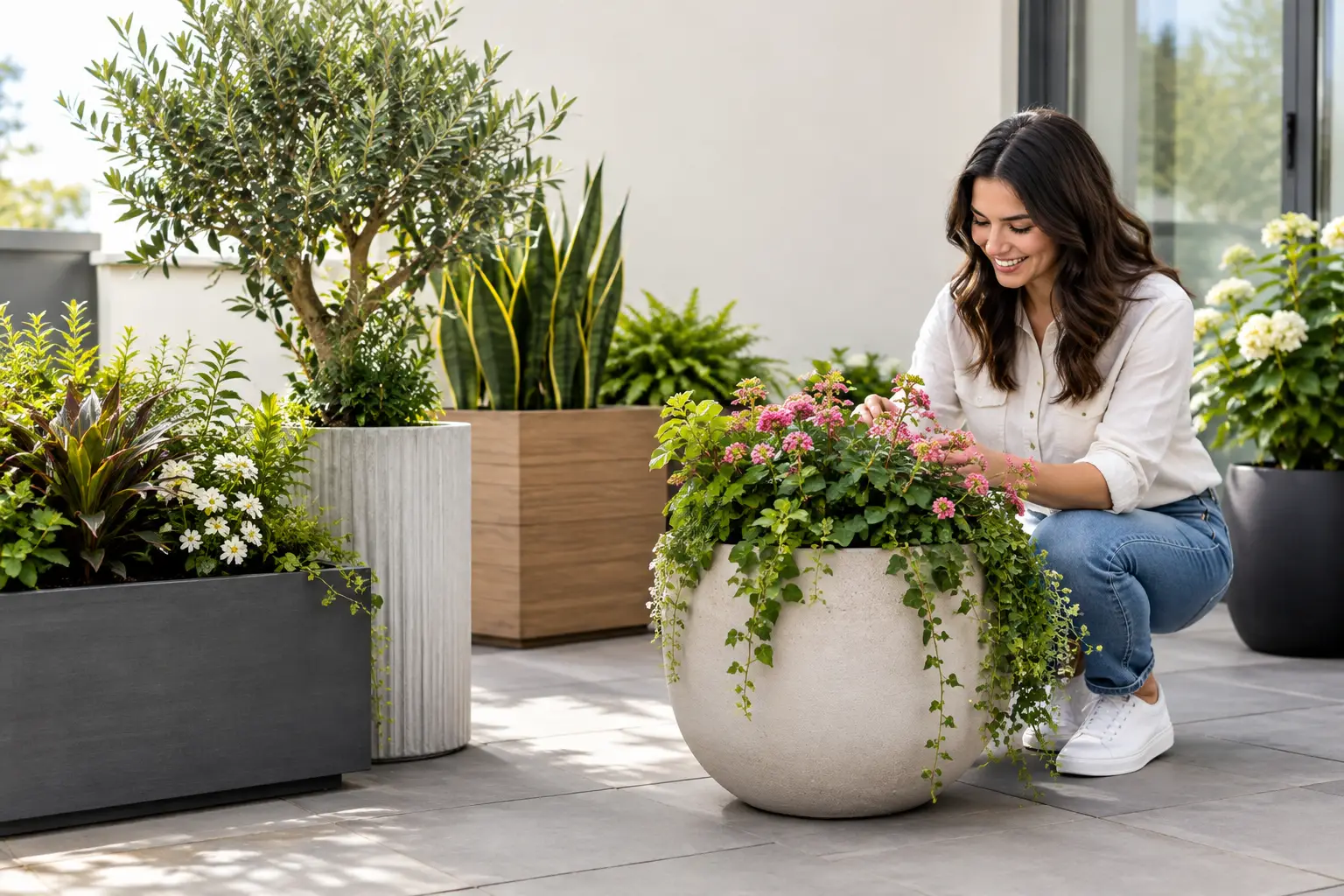
A planter can do much more than hold a plant. It can soften a bare patio, bring a quiet corner to life, frame a front door or make a small balcony feel like a private retreat. At Artisan Goods, we love the way handcrafted garden details can make outdoor spaces feel as personal and restorative as the rooms inside your home. Choosing garden planters well starts with the plant, but it should also reflect how you use your space and the atmosphere you want to create.
Choosing Garden Planters: Start With the Plant
It is tempting to choose a pot because its colour or texture catches your eye, then find something to put in it later. For a more successful display, reverse that order. Consider the mature size of the plant, its root system, how thirsty it is and whether it will stay outdoors through a British winter.
A planter that is too small restricts roots, dries out quickly and can leave a healthy-looking plant struggling by midsummer. One that is excessively large may stay wet for too long, particularly in cooler or rainy conditions. As a simple guide, choose a new planter that gives the root ball a little growing room around the sides and below, rather than several inches of empty compost in every direction.
Plants with deep or vigorous roots, such as small shrubs, climbers and taller grasses, need a deeper container with a reassuringly broad base. Compact herbs, trailing plants and seasonal flowers are often happier in shallower designs. If you are planting a mixed arrangement, choose varieties with similar needs for sun, water and soil. A sun-loving, free-draining display will be difficult to maintain if one plant prefers shade and consistently moist compost.
Choose a Material for the Setting
Planter materials each have a different character, and the practical differences matter as much as the look. The best choice depends on where the planter will sit and how much care you want it to need.
Terracotta and ceramic planters
Terracotta has a warm, earthy finish that works beautifully with cottage-style planting, fragrant herbs and flowering bulbs. Because it is porous, moisture can evaporate through the sides as well as from the compost surface. That is useful for plants that dislike wet roots, but it means containers may need more frequent watering in a warm spell.
Glazed ceramic planters offer richer colour and a more decorative finish. They can be especially effective near a seating area, conservatory entrance or sheltered doorway, where one well-chosen piece can become part of the overall décor. Check whether ceramic planters are frost-resistant before leaving them outdoors all year. Water that freezes inside a porous pot can cause cracking, so a sheltered position is often the kinder option in winter.
Metal, wood and woven-style finishes
Metal planters can bring a clean, contemporary contrast to abundant greenery. They are often best in a position where their surface will not become uncomfortably hot in strong sunshine. If you are growing plants with sensitive roots, lining the planter or using a nursery pot inside can help moderate temperature changes.
Wooden planters feel relaxed and natural, particularly beside fencing, on decks and in garden rooms. Look for a liner or inner container that separates damp compost from the timber. This helps the planter last longer and gives you a neater planting space.
Textured, woven-look and artisan-inspired finishes bring a softer, more tactile note to an outdoor display. They are ideal when you want your garden to feel less formal and more collected over time. Pair them with leafy plants, grasses or trailing foliage to emphasise that easy, layered look.
Size, Proportion and Visual Balance
Scale is where many outdoor displays fall flat. A tiny planter can disappear beside a wide sofa, large dining set or substantial front door, while several oversized containers can make a narrow courtyard feel crowded. Before ordering, measure the available floor space and imagine the planter at its fullest planted height, not just as an empty vessel.
One generous planter often makes more impact than a cluster of very small ones. It also gives plants more compost and moisture to work with, which can make maintenance easier. On the other hand, a grouping of two or three coordinating planters can add rhythm to a patio or entrance. Vary their heights slightly, but repeat a material, colour family or planting style so the arrangement looks intentional rather than accidental.
For doorways, aim for balance rather than strict symmetry. Matching planters with clipped evergreens or seasonal colour can look polished, but an asymmetrical pair also works if one is taller and the planting connects them. On balconies, keep sightlines open. Taller, slimmer planters placed at the edge can create privacy without using up every inch of usable room.
Drainage Is Not a Small Detail
Even the most beautiful planter must let excess water escape. Most plants suffer more from roots sitting in cold, waterlogged compost than from missing the occasional watering. Check for drainage holes before planting, and make sure they do not become blocked by compacted soil.
Place a piece of broken terracotta, mesh or a suitable cover over each hole to keep compost from washing out while allowing water to drain. Avoid creating a thick layer of stones at the bottom of the planter in the hope of improving drainage. In many containers, this simply raises the level at which water can sit. A quality compost suited to your plant, plus clear drainage holes, is usually the more helpful combination.
If a decorative pot has no drainage, use it as a cover pot rather than planting directly into it. Keep the plant in a nursery pot with holes, then remove it for watering and allow it to drain fully before returning it. This approach is particularly useful for sheltered spaces where rain does not naturally rinse through containers.
Think About Weight Before You Fill It
A planter that feels manageable when empty can become extremely heavy once filled with damp compost and a mature plant. This matters on balconies, roof terraces, steps and any surface where you may want to rearrange your display later.
Larger containers do not need to be filled entirely with compost if the plant only requires depth near the top. A lightweight, stable filler beneath the compost can reduce weight, provided it does not block drainage or take up vital root room. Planter feet are another simple consideration. Raising containers slightly helps water escape, reduces staining on patios and allows air to circulate beneath them.
If you enjoy refreshing your garden with the seasons, reserve the heaviest planters for permanent planting and use smaller, moveable containers for spring bulbs, summer flowers and winter foliage. This gives you flexibility without turning every seasonal change into a lifting job.
Match the Planter to Your Garden Mood
The most inviting gardens rarely rely on one colour, one shape or one kind of planting. They feel considered because there is a common thread. That thread might be warm terracotta tones, dark neutral finishes, a preference for handcrafted texture or a repeated leaf colour across different areas.
For a calm, wellness-inspired corner, choose natural-looking materials and plant with soft green foliage, aromatic herbs and gently trailing varieties. Place the arrangement near a bench or outdoor chair, where it can become part of a slower daily ritual – morning tea, a few quiet minutes after work or an evening candlelit gathering when the weather allows.
For a more abundant, gift-like sense of welcome at the front of the house, select one or two statement planters and refresh the planting as the seasons shift. Spring bulbs, summer flowers, autumnal foliage and winter evergreens all bring their own appeal. The container remains the lasting piece, while the planting changes the mood.
Care That Keeps Planters Looking Their Best
Container plants depend on you more than plants in open ground. During warm, dry weather, check compost with a finger before watering. If it is dry below the surface, water thoroughly until moisture runs from the drainage holes. A quick splash every day can encourage shallow roots, while a deeper soak supports healthier growth.
Feed flowering and fast-growing plants during their active season according to the needs of the variety. Remove faded blooms where appropriate, trim untidy growth and turn planters occasionally if one side receives much more light. In winter, move vulnerable containers into a sheltered spot or raise them on feet so they are not left sitting in pooled water.
The right planter makes a plant easier to care for, but it also changes how a garden feels when you step outside. Choose pieces with enough room to grow, reliable drainage and a finish you will enjoy seeing every day, then let the planting bring the final touch of colour, scent and life.