
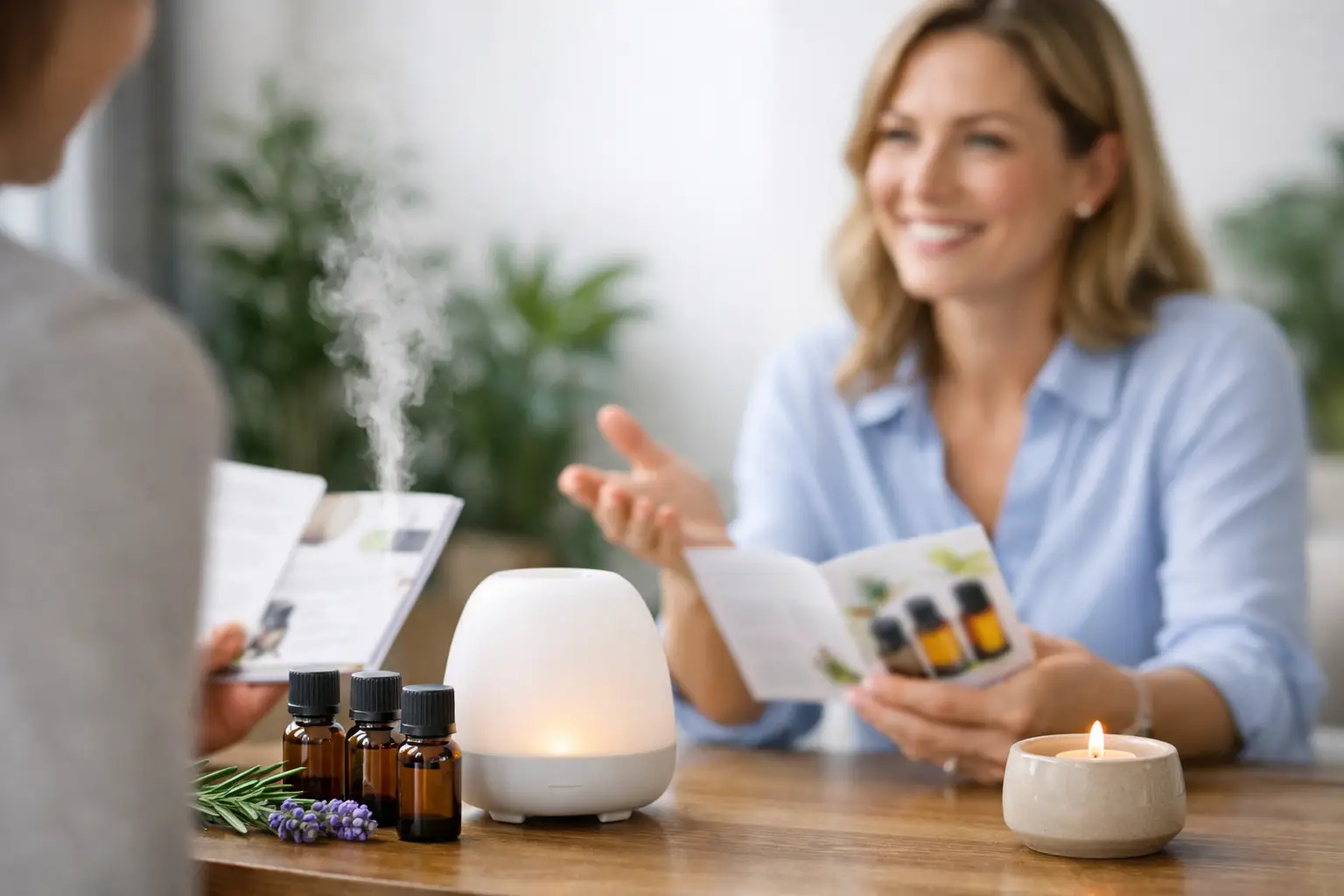
A few drops of essential oil can make a bath, bedroom or quiet evening ritual feel beautifully considered. Yet the most useful aromatherapy safety questions are rarely about which scent smells best. They are about dilution, skin sensitivity, children, pets and when a relaxing home fragrance should be kept simple. At Artisan Goods, we believe self-care feels better when it is approached with a little knowledge as well as a love of beautiful scent.
Start with the format, not just the fragrance
Essential oils are concentrated plant extracts, not ready-to-use perfume. That distinction matters. A bottle may be small, but its contents are potent and should be treated thoughtfully, particularly when applying them to the body or using them in a shared home.
The format changes the safety considerations. A diffuser disperses scent into the air, a bath oil comes into contact with skin, and a candle is primarily enjoyed for ambience but also involves an open flame. Before choosing a scent for a particular ritual, consider who will be nearby, how long it will be used for and whether there are any relevant health concerns.
Natural does not automatically mean gentle for everyone. Plants contain complex aromatic compounds, and a person can react to a natural ingredient just as they can to many everyday products. Begin with a modest amount, especially when trying a new oil or blend.
Can essential oils be used directly on skin?
In most cases, no. Essential oils should not be applied neat to the skin unless a product label and qualified professional guidance specifically say otherwise. Direct application can cause irritation, an allergic reaction or sensitisation, where skin becomes more likely to react with future exposure.
For massage or body use, dilute essential oils in a suitable carrier oil or choose a pre-blended product made for skin application. A low dilution is generally the sensible place to start for everyday adult use. The right level depends on the oil, the area of the body, age and individual sensitivity, so always follow the product instructions rather than relying on a one-size-fits-all recipe.
A patch test is a practical precaution when using a new topical product. Apply a small amount of the correctly diluted blend to a discreet area of intact skin and wait to see whether redness, itching or discomfort develops. Do not patch test on broken, inflamed or freshly shaved skin. If irritation occurs, stop using the product and wash the area gently with soap and water. Seek medical advice if symptoms are severe or persist.
Keep oils away from eyes, lips, nostrils and other sensitive areas. If an oil gets into the eyes, rinse carefully with plenty of clean water and obtain medical advice if discomfort continues. Essential oils should not be swallowed unless this has been advised by an appropriately qualified healthcare professional.
Why dilution is part of the ritual
Dilution is not a compromise on scent. It makes aromatherapy more comfortable, more measured and easier to enjoy over time. A softly scented body oil or bath product can feel every bit as indulgent as a stronger blend, without overwhelming the senses or asking too much of the skin.
Some citrus oils can increase sensitivity to sunlight when used on skin. If you have used a citrus-containing leave-on blend, check its label for sun-exposure guidance and take extra care with treated skin before heading outdoors. This is one reason why product-specific instructions are more useful than assumptions based on a scent name alone.
Is it safe to put essential oils in the bath?
Not straight into the water. Oil and water do not properly mix, so undiluted essential oil can sit on the surface and come into direct contact with skin. This can be particularly uncomfortable in a warm bath, where skin may be more sensitive.
Choose a bath product formulated for bathing, or use an appropriate dispersing base according to the maker’s directions. A small amount is usually enough. If the bath stings, feels excessively hot or causes any irritation, get out, rinse the skin and discontinue use.
For a gentler at-home ritual, a fragranced soap, bath bomb or carefully made bath product may be a more straightforward choice than adding oils yourself. The experience still feels special, while the formula has been designed for that purpose.
Diffuser safety for everyday homes
Diffusers offer a lovely way to set the tone of a room, whether you prefer a fresh morning scent in the kitchen or a quieter fragrance in the bedroom. They should still be used with care. Position the diffuser on a stable, wipe-clean surface, away from children, pets, flames and electrical hazards. Follow the water level and cleaning guidance supplied with the device.
Less is often more. Start with fewer drops than you think you need and diffuse in a ventilated space for a limited period rather than continuously all day. Strong fragrance can cause headaches, nausea or respiratory discomfort for some people, even when a scent is otherwise enjoyable. Switch it off if anyone feels unwell or finds the aroma too intense.
Never leave an electrical diffuser running unattended, and avoid placing it close to bedding, curtains or treasured wooden furniture. Clean it regularly so old water and oil residue do not affect performance or create unpleasant odours.
What about children, pregnancy and medical conditions?
This is where aromatherapy safety questions need individual answers. Babies and young children are more sensitive to fragrance than adults, and certain essential oils are not suitable for particular ages. Keep bottles securely stored out of reach, avoid using concentrated oils around infants without professional advice, and choose a very cautious approach in children’s rooms.
During pregnancy or while breastfeeding, it is wise to seek guidance from a midwife, pharmacist or qualified aromatherapist before using essential oils, particularly in a bath, massage blend or diffuser. The same applies if you have asthma, epilepsy, allergies, a skin condition or are taking regular medication. Aromatherapy can be a comforting addition to a routine, but it is not a substitute for medical care.
If you are buying for someone else, a scented candle, room fragrance or ready-made bath treat can be a thoughtful present, but it is considerate to include the packaging and instructions. Let the recipient decide what suits their household and circumstances.
Aromatherapy and pets: take a cautious approach
Pets experience scent differently from people, and cats, dogs, birds and small animals can be especially sensitive to airborne fragrance. Their smaller bodies, close proximity to floors and different ways of processing substances all affect risk. Do not apply essential oils to an animal or add them to its bedding, food or water unless advised by a veterinary professional.
When diffusing in a home with pets, use a large, well-ventilated room and make sure the animal can leave the area freely. Keep bottles and diffusers inaccessible. Birds deserve particular caution because their respiratory systems are very sensitive. If a pet shows coughing, drooling, unusual tiredness, wobbliness, vomiting or changes in behaviour, stop using the product, move them to fresh air and contact a vet promptly.
Candle and home-fragrance safety still matters
Aromatherapy is not limited to oils. Scented candles and home fragrance can make a room feel warm and welcoming, but the familiar fire-safety rules are part of the pleasure. Burn candles on a heat-resistant surface, away from drafts, curtains and anything that may catch fire. Keep them out of reach of children and pets, never leave them unattended and extinguish them before leaving the room or going to sleep.
Trim the wick when the product instructions recommend it, and do not continue burning a candle once very little wax remains. With any home fragrance, store products in a cool place away from direct sunlight and heat. Labels are worth keeping, especially when a product is being given as a present.
Your essential oil safety checklist
Before bringing a new scent into your routine, pause for a quick check:
- Read the label and use the product only in the way it was designed to be used.
- Dilute oils intended for skin use and patch test new topical blends.
- Keep all oils and fragranced products away from eyes, mouths, children and pets.
- Diffuse lightly, in a ventilated room, and give everyone in the home an easy way to step away from the scent.
- Stop using a product if it causes irritation, discomfort or breathing symptoms, and seek professional advice where needed.
Aromatherapy should add a gentle sensory layer to your home, not create a long list of worries. Choose well-made products, use them with restraint and let scent be something you can enjoy at your own pace – whether you are creating a quiet evening for yourself or choosing a meaningful little treat for someone you care about.