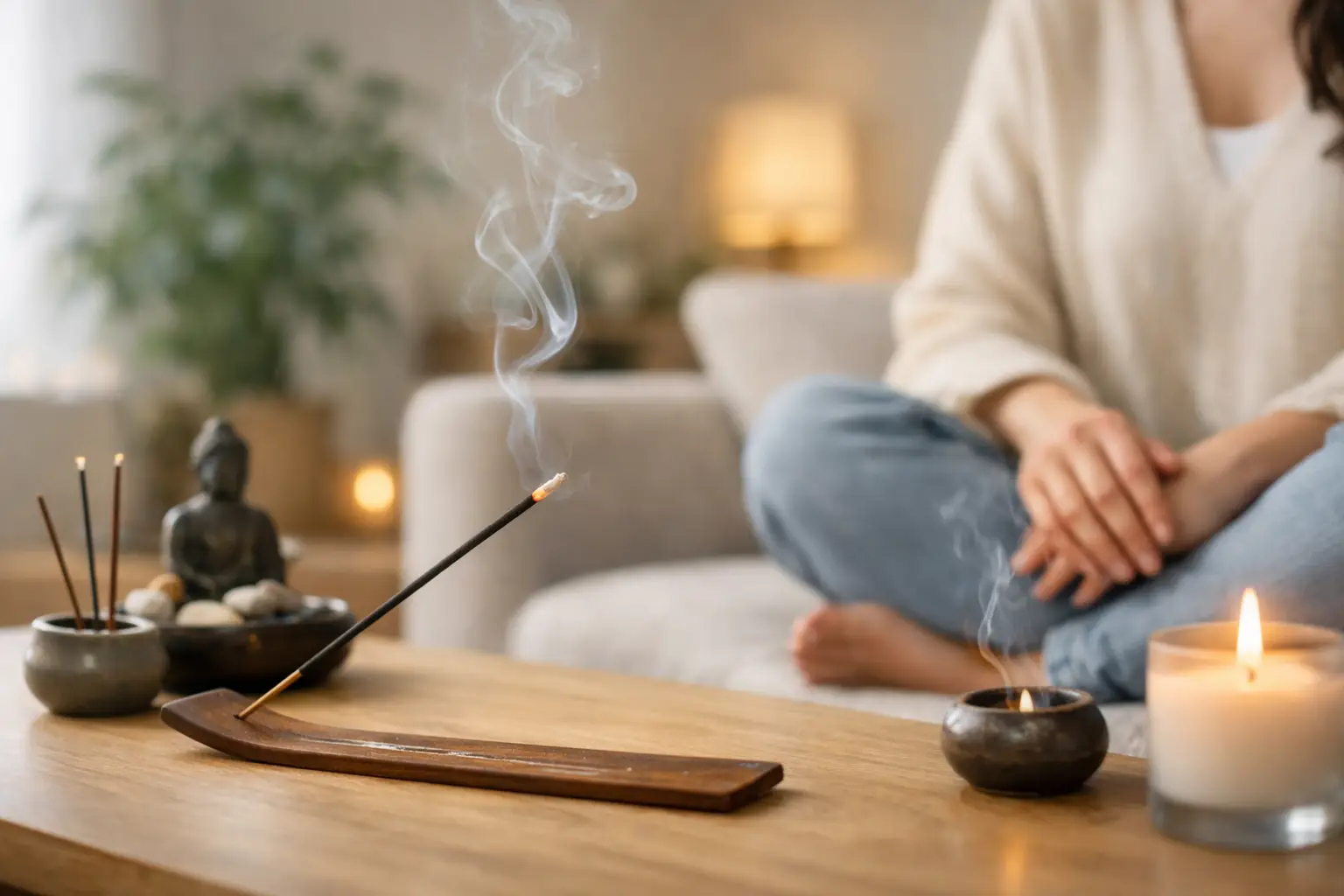
A softly scented incense ritual can change the feel of a room in minutes, whether you are settling down after work, preparing for meditation or adding warmth to a quiet weekend morning. At Artisan Goods, we believe those small sensory moments should feel calming rather than complicated. Knowing how to burn incense safely means you can enjoy its fragrance while protecting your home, the people in it and the peaceful atmosphere you are trying to create.
Start with the right place to burn incense
Incense needs a clear, stable surface. Choose a heat-resistant table, shelf or hearth where the burner cannot wobble, then keep it well away from curtains, lampshades, books, dried flowers, clothing and other easily ignited items. A low coffee table may look inviting, but it is not always the best choice if children or pets can reach it.
Avoid placing incense directly on wooden furniture, a window ledge or the edge of a bath. Even when the flame has gone out, the glowing tip and falling ash can remain surprisingly hot. A ceramic, metal or stone holder adds a useful layer of protection, especially when placed on a heatproof tray.
The ideal spot has gentle airflow, not a strong draught. An open window can help prevent fragrance from becoming too concentrated, but a breeze that catches the burning end may scatter ash, speed up the burn or carry smoke towards fabrics. If you are using incense in a smaller room, leave the door open or crack a window rather than trying to create a strong through-draught.
Choose a holder that catches every bit of ash
The safest holder is one designed for the particular incense format you are using. A stick needs a holder with a secure hole and a long enough channel or dish to catch ash as it falls. Check that the stick sits upright or at a slight angle without slipping. If ash routinely lands beyond the holder, move to a wider tray before burning another stick.
Cones need a heatproof dish or burner with raised sides. They become hot underneath as they burn, so do not rest them on a coaster, plate or decorative surface unless it is specifically heat-resistant. Place the cone in the centre of the burner, leaving space around it for ash.
For loose incense or resin, use a purpose-made burner that separates the heated material from the surface below. These can produce more heat and smoke than a standard stick, so they call for extra attention, a clear surrounding area and reliable ventilation. Whatever format you choose, never improvise with paper, cardboard, a tea towel or an unstable ornament.
How to burn incense safely, step by step
Light only the very tip of an incense stick or cone with a match or lighter. Let it catch for a few seconds, then gently blow out the visible flame. It should continue to glow and release a thin ribbon of fragrant smoke. If there is a tall flame, it has not been extinguished properly.
Set the incense straight into its holder before moving away. Do not carry it around the house while it is lit, and do not lean close to check whether it is still burning. A brief visual check from a safe distance is enough.
Stay at home and remain alert while incense burns. You do not have to sit beside it for the full ritual, but it should never be left unattended while you are cooking, showering, sleeping, taking a call in the garden or popping out. Treat it with the same care you would give a lit candle.
If you want to end the burn early, press the glowing tip carefully into sand, ash or a heatproof bowl until it is fully out. Do not use water on a holder that may crack from sudden temperature change, and do not assume incense has stopped burning simply because smoke is no longer visible. Wait until the remains are completely cool before emptying them into the bin.
Keep smoke comfortable, not overwhelming
Incense is intended to scent the air, not fill every corner of a room. Start with one stick or cone, especially in a bedroom, home office or smaller living space. You can always burn another on a different day, but an overly smoky room can be unpleasant and may cling to soft furnishings.
Ventilation matters. Open a window slightly, particularly after the incense has finished, to let fresh air circulate. If the scent feels heavy, move the burner to a larger space next time or choose a shorter burn rather than masking it with another home fragrance.
Some people are more sensitive to smoke and scent than others. If anyone in your household has asthma, allergies, migraines, a respiratory condition or scent sensitivity, ask before burning incense in shared areas. It may be best to reserve the ritual for a well-ventilated room when they are not using it, or to choose another way to create a comforting atmosphere.
Be especially careful around children and pets
A glowing incense tip is a burn risk, and ash can be tempting for curious hands and paws. Keep the burner high enough that it cannot be reached, knocked over or brushed past. Do not leave it on the floor, even for a moment, and make sure trailing sleeves, pet bedding and toys are nowhere near the burning area.
Pets can also be more affected by airborne fragrance than people. Watch for signs that a pet is uncomfortable, such as leaving the room, coughing, sneezing or appearing unsettled. Give them an easy way to move into a fragrance-free area, and keep the room ventilated.
When children are visiting, it is usually simplest to wait until the house is quieter. Incense works best as an unhurried ritual anyway. There is no need to rush it, and no atmosphere is improved by worrying about a small hand reaching towards the burner.
Make incense part of a considered home ritual
Safety does not take away from the sensory pleasure of incense. In fact, a few simple habits make the experience more relaxing. Prepare your space first: clear the surface, choose your holder, open a window a little and decide where you will spend the next part of your evening. That preparation creates a pause before the fragrance even begins.
Keep your incense supplies dry and away from direct sunlight, radiators and naked flames. Damp sticks can be difficult to light and may burn unevenly, while loose storage can leave them vulnerable to breakage. A dedicated box, drawer or lidded container keeps scents fresh and makes it easier to find your preferred fragrance when you want it.
It is also worth cleaning your holder regularly. A build-up of ash can stop a stick sitting securely, and old residue can affect the appearance of a ceramic or metal burner. Once everything has cooled, empty the ash carefully and wipe the holder with a dry or lightly damp cloth, following the care guidance for its material.
Common incense mistakes to avoid
Most incense mishaps come down to placing it somewhere unsuitable or assuming it needs less attention than a candle. Never burn incense on or near bedding, sofas, paper decorations or crowded shelves. Do not leave it burning overnight, and do not use a holder that is chipped, cracked or too shallow to catch ash.
Avoid burning several pieces at once simply to make a scent stronger. More smoke is not always more enjoyable, and it makes ventilation harder to manage. If you are hosting friends or creating a relaxing setting before a bath, yoga session or mindful moment, one well-placed piece is usually enough.
Finally, trust your senses. If the room feels smoky, the scent is irritating or the burner seems unstable, extinguish the incense and reset. A good home ritual should feel gentle, personal and easy to return to. With a secure holder, a clear surface and a little fresh air, incense can remain one of the simplest ways to bring a grounded, welcoming mood into your home.